How to Keep an Idiot Busy Video: The Internet Prank Explained
 David Mccullough
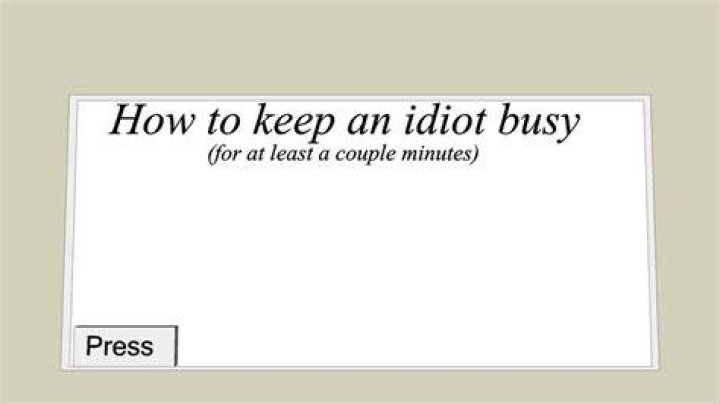
 The "how to keep an idiot busy" video represents one of the internet's most enduring pranks. Simple in concept yet surprisingly effective, these videos typically promise instructions or entertainment, only to loop viewers into a repetitive cycle that reveals the joke: you've been had. The prank has evolved across platforms from early YouTube to TikTok, adapting to each generation's sense of humor while maintaining its core premise.
What started as crude PowerPoint presentations and basic video loops has transformed into sophisticated content that capitalizes on human curiosity and our tendency to follow instructions. These videos thrive because they exploit a fundamental aspect of online behavior: we click first and think later. The formula remains devastatingly simple, yet people continue falling for variations of this digital trap years after its inception.
The Basic Concept Behind the Prank
At its heart, the "keep an idiot busy" video follows a straightforward template. A creator produces content that appears instructional or informative, often with titles like "How to Keep an Idiot Busy for Hours" or "Watch Both Sides." The video contains arrows, instructions to flip your phone, prompts to read certain text, or directions to watch another version. Viewers follow these instructions, only to realize they're stuck in an endless loop with no actual payoff.
Some versions display text on both sides of a card or screen, instructing viewers to flip back and forth repeatedly. Others embed QR codes that lead to the same video. The most elaborate versions create multi-video chains where each clip promises the "real" content is in another video, creating a wild goose chase across a channel or platform.
The punchline arrives when the viewer realizes they've been watching a loop designed specifically to waste their time. That moment of recognition—often accompanied by laughter or mock frustration—is precisely what makes these videos shareable. People tag friends, challenging them not to fall for it, which paradoxically increases the prank's reach.
Historical Origins and Evolution
While pinpointing the exact origin proves difficult, the concept predates modern video platforms. Physical gag gifts and novelty items used similar premises decades ago. Books titled "How to Keep an Idiot Busy" would instruct readers to turn to another page, which would then direct them back to the first page, creating an analog loop.
The digital version gained traction in the mid-2000s as YouTube democratized video creation. Early examples featured simple text instructions with arrows pointing viewers to flip their screens or rotate their devices. These primitive versions lacked production value but compensated with pure novelty. Back when smartphone video was still developing, asking someone to physically rotate their device felt innovative.
TikTok and Instagram Reels breathed new life into the format around 2019-2020. Short-form vertical video proved perfect for these pranks. Creators could exploit swipe mechanics, duet features, and platform-specific navigation to make loops more convincing. The algorithm's tendency to show similar content also meant viewers might encounter multiple versions in one session, amplifying the effect.
Why These Videos Keep Working
Despite widespread awareness, "keep an idiot busy" videos continue tricking viewers. Several psychological factors explain this persistence. First, titles and thumbnails tap into genuine curiosity. When someone sees a prompt promising interesting content or a solution to a problem, the impulse to click overrides skepticism.
Second, the investment fallacy kicks in. Once you've followed the first instruction—flipped your phone, turned the volume up, read the first side—you're mentally committed to seeing it through. Each additional step increases this commitment, making it harder to abandon the video even as suspicion grows.
Third, these pranks exploit the pace of content consumption. We scroll and click rapidly, giving ourselves little time to evaluate each piece of content critically. By the time cognitive processing catches up with behavior, you're already several loops deep into the prank.
Social pressure also plays a role. When a friend tags you or shares the video as a challenge, you watch with the specific goal of either not falling for it or proving you're not the "idiot" in question. This defensive mindset can actually make you more susceptible, as you focus on proving something rather than questioning the content's legitimacy.
Popular Variations and Formats
The basic concept has spawned countless variations, each adding unique twists to the formula. Here are some common approaches:
- The Double-Sided Card: Physical or digital cards showing text on both sides, with instructions to flip repeatedly between them. Each side promises the punchline is on the other side.
- The Volume Trick: Videos claiming you need to turn your volume to maximum to hear something, only to play silence or loop back to the instruction.
- The Rotation Loop: Content that instructs viewers to rotate their device 180 degrees, revealing identical instructions upside down.
- The Multi-Video Chain: Series of videos where each one directs you to watch another video on the channel, creating a circular reference with no conclusion.
- The QR Code Trap: Videos displaying QR codes that, when scanned, simply lead back to the same video or another loop variation.
- The Playlist Prank: Entire playlists designed to loop infinitely, with each video promising the "real" content is next.
- The Interactive Story: Platform features like Instagram Stories used to create choose-your-own-adventure style loops where every choice leads back to the start.
The Role in Internet Culture
These videos occupy a specific niche in digital humor. They're self-aware jokes that acknowledge their own pointlessness. Unlike pranks that humiliate or cause genuine distress, the "idiot busy" format operates on gentle mockery. The joke is shared between creator and victim—once you realize you've been pranked, you're in on it.
This shareability factor explains their viral potential. People don't just watch these videos; they weaponize them. Tagging a friend in the comments becomes a playful challenge or light roast. The format has spawned countless response videos, parodies, and meta-commentary pieces that analyze why they work.
Content creators leverage these videos strategically. A well-timed "keep an idiot busy" video can boost channel engagement significantly. Comments fill with people tagging friends, reactions range from genuine laughter to mock outrage, and the algorithm interprets all this activity as positive engagement, pushing the content to more viewers.
Educational Value and Media Literacy
Surprisingly, these seemingly frivolous pranks offer lessons in media literacy. They demonstrate how easily our attention can be manipulated through design choices, instruction framing, and exploitation of platform mechanics. Recognizing these patterns helps viewers develop more critical consumption habits.
Educators and digital literacy advocates sometimes use these videos as teaching tools. They illustrate concepts like clickbait psychology, attention economics, and the importance of questioning digital content before engaging fully. The low-stakes nature makes them perfect case studies—getting "fooled" by one carries no real consequence beyond a few wasted moments.
The videos also showcase evolving platform features. Each new social media tool—Stories, Reels, Duets, Stitches—gets adapted into new loop variations. Tracking these adaptations provides insight into how creators push platform boundaries and experiment with interactive features.
Creating Your Own Version
Making an effective "keep an idiot busy" video requires balancing several elements. The setup needs enough credibility to hook viewers without being dishonest about something important. The loop should become apparent quickly enough to be funny rather than genuinely frustrating. And the payoff—that moment of realization—should feel clever rather than mean-spirited.
Successful versions often include self-aware humor. Text that reads "Congratulations, you've been keeping yourself busy" or "Thanks for watching" acknowledges the joke without over-explaining it. Some creators add actual content after the loop as a reward for persistent viewers, turning the prank into a filter for dedicated audience members.
Platform-specific features enhance effectiveness. TikTok's duet function allows creators to build off existing loop videos. Instagram's swipe-up links (now stickers) can create seemingly interactive experiences. YouTube's end screens and cards enable multi-video chains that feel like legitimate playlists.
Ethical Considerations
While generally harmless, these videos raise minor ethical questions about consent and time value. Unlike explicit comedy content where viewers expect jokes, these pranks rely on mild deception. Most people laugh it off, but some find the time-wasting aspect genuinely annoying, especially if the loop isn't obvious quickly.
Context matters significantly. A video clearly labeled as humor or a prank sets different expectations than one masquerading as genuine tutorial content. The line between playful joke and frustrating waste of time varies by individual, making creator intent and transparency important considerations.
Accessibility represents another factor. Videos relying heavily on visual tricks or requiring device manipulation may exclude viewers with certain disabilities. While this isn't unique to loop pranks, creators should consider whether their specific implementation inadvertently creates barriers.
Frequently Asked Questions
What's the point of "keep an idiot busy" videos?
These videos serve primarily as light-hearted pranks and social entertainment. They create shareable moments where people can tag friends, test others' attention spans, or simply enjoy a harmless joke. Beyond entertainment, they demonstrate how easily our attention can be manipulated through simple design and instruction, offering informal lessons in digital media literacy.
Are these videos mean-spirited?
Generally no. The humor targets universal human traits—curiosity, instruction-following, and rapid content consumption—rather than individual characteristics. Most versions reveal the joke quickly enough that any "fooled" feeling is momentary and shared. The term "idiot" is used playfully rather than as genuine insult, and the prank works because it could trick anyone, regardless of intelligence.
How can I avoid falling for these videos?
Watch for common warning signs: excessive instructions to flip, rotate, or navigate elsewhere; videos that seem to promise content but keep delaying it; repetitive patterns that don't progress; and titles that explicitly mention keeping someone busy. However, part of their charm lies in occasionally catching even skeptical viewers off-guard. If you do fall for one, consider it a harmless reminder to approach online content with healthy skepticism.
Final Thoughts
The "how to keep an idiot busy" video phenomenon represents internet humor at its most democratic. Anyone can create one, anyone can fall for one, and everyone can appreciate the simplicity of the joke once revealed. These loops persist not despite our awareness of them, but because of it—they've become a shared cultural reference point that transcends individual platforms or trends.
As digital platforms evolve and new features emerge, expect fresh variations on this classic formula. Each generation of internet users discovers and reinvents the concept, adding contemporary touches while preserving the essential loop structure. Whether you find them amusing or annoying, these videos reflect something fundamental about how we navigate digital spaces: quickly, optimistically, and sometimes without quite enough caution. That's not stupidity—that's just being human in an age of endless content.