Aim for the Bushes: The Iconic Scene That Defined a Generation of Comedy
 Rachel Newton
 In 2010, a single scene from an action-comedy film achieved something remarkable. It became more than just a memorable movie moment—it transformed into a cultural touchstone that people still reference today. When two confident detectives leap from a building expecting some miraculous Hollywood save, only to plummet directly into the pavement, audiences witnessed comedy gold. The phrase "aim for the bushes" entered the lexicon of internet culture, spawning countless memes, references, and debates about what makes perfectly timed absurdity so unforgettable.
The scene comes from "The Other Guys," directed by Adam McKay and starring Will Ferrell and Mark Wahlberg. But the moment in question features Dwayne "The Rock" Johnson and Samuel L. Jackson as Detectives Danson and Highsmith—two hyper-competent cops who embody every action movie stereotype. Their sudden, unexpected fate serves as the film's opening salvo, establishing that this movie refuses to play by conventional rules. What seems like a throwaway line before their fatal jump has become one of the most quoted moments in modern comedy cinema.
The Scene That Changed Everything
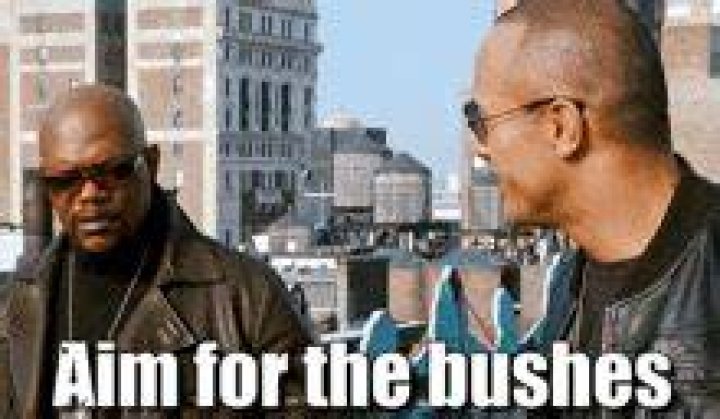
Danson and Highsmith represent everything audiences expect from buddy cop films. They're fearless, skilled, and impossibly cool. During a rooftop pursuit, they chase suspects with the kind of reckless confidence that typically gets rewarded in action movies. Without hesitation, they leap from a multi-story building. "Aim for the bushes," one says to the other, despite the complete absence of any bushes, trees, or soft landing spots below.
They fall. The camera follows them down. There's no airbag, no conveniently placed fruit cart, no last-second save. They simply hit the concrete. Dead. The funeral that follows treats this absurd death with complete seriousness, which amplifies the comedy exponentially.
This subversion of expectations works because action movies have conditioned audiences to expect miraculous survivals. Heroes leap from impossible heights and walk away. Buildings explode behind them as they casually stroll forward. The laws of physics bend to accommodate star power. McKay understood this formula intimately and demolished it in under three minutes.
Why This Moment Resonates
The brilliance lies in the commitment. Johnson and Jackson play their characters completely straight. There's no winking at the camera, no acknowledgment of the impending ridiculousness. They believe they're in a standard action film right up until gravity reminds them otherwise. That sincerity makes the punchline devastating.
Comedy theorists often discuss the importance of surprise in humor. The human brain creates expectations based on patterns. When those patterns break unexpectedly, laughter follows. "Aim for the bushes" weaponizes decades of action movie conditioning against the audience. Every viewer knows these characters should survive. The movie knows that viewers know. Then it does the opposite anyway.
The phrase itself has taken on a life beyond the film. It's become shorthand for misplaced confidence, for moments when someone commits fully to a terrible idea, or for situations where ambition vastly exceeds reality. Office workers use it when a project goes spectacularly wrong. Friends reference it when someone makes an obviously bad decision with complete confidence.
Cultural Impact and Legacy
Social media amplified the scene's reach far beyond the film's theatrical audience. YouTube clips of the moment have accumulated tens of millions of views. Reaction videos, compilations, and analysis pieces continue to appear years after the film's release. The scene transcended its source material to become a standalone cultural artifact.
Meme culture embraced "aim for the bushes" with particular enthusiasm. Image macros pair the phrase with photographs of various failures and miscalculations. GIFs of the jump circulate whenever someone needs to illustrate overconfidence or spectacular failure. The scene's inherent absurdity makes it infinitely remixable and applicable to countless situations.
Other filmmakers have cited this moment as influential. Parody and satire require understanding what you're satirizing. McKay demonstrated that the most effective comedy doesn't just mock its target—it inhabits that target completely before revealing its ridiculousness. The scene works because Johnson and Jackson could absolutely star in a serious action film. Their credibility sells the joke.
The Genius of Adam McKay
Director Adam McKay built his career on intelligent comedy that trusts its audience. From his work on "Saturday Night Live" to films like "Anchorman" and "Step Brothers," he's consistently found humor in commitment and escalation. "The Other Guys" represented his evolution into comedy that also functions as sharp genre criticism.
The film didn't just want laughs—it wanted to examine why action movies follow certain formulas and what happens when those formulas fail. By killing off the most capable characters immediately, McKay forces the story to focus on Ferrell and Wahlberg's desk-bound detectives. These ordinary cops must navigate a world designed for superhuman action heroes. The entire film explores that tension between Hollywood fantasy and mundane reality.
McKay's later work would tackle more serious subjects, from financial corruption in "The Big Short" to political machinations in "Vice." But his comedy roots remain evident in how he structures information and uses absurdity to highlight truth. "Aim for the bushes" contains seeds of his later approach—taking something audiences accept without question and forcing them to see its inherent ridiculousness.
Key Elements That Make It Work
- Perfect casting: Johnson and Jackson brought genuine action credibility that made the subversion more powerful
- Straight-faced delivery: No one breaks character or acknowledges the absurdity until after the impact
- Timing: The scene occurs early enough to establish the film's tone without overstaying its welcome
- Sound design: The music swells heroically during the jump, enhancing the expectation before the fall
- Consequences: The film treats their deaths seriously, with a funeral that other characters genuinely mourn
- Visual clarity: The absence of bushes is immediately obvious, making the line itself absurdly optimistic
- Cultural context: Decades of action movie tropes set up audience expectations that the scene demolishes
The Quotability Factor
Great movie lines stick because they're versatile. "Aim for the bushes" works in countless contexts. Someone suggests a risky business strategy? Aim for the bushes. A friend insists they can definitely make that jump in a video game? Aim for the bushes. An athlete attempts something wildly beyond their skill level? You get the idea.
The phrase captures something universal about human nature—our tendency to commit fully to ideas even when success seems unlikely. It celebrates and mocks that confidence simultaneously. There's affection in the reference, not just derision. We admire the commitment even as we recognize the foolishness.
Language evolves through shared cultural experiences. Movies, television, and internet culture create common reference points that bind communities together. When someone says "aim for the bushes" and others immediately understand the reference, it creates a moment of connection. Shared knowledge becomes social currency.
Behind the Scenes
According to interviews, the scene was carefully planned but kept somewhat secret during production. Johnson and Jackson reportedly committed to the bit completely, understanding that their genuine star power would make the joke land harder. The physical comedy required precision—the fall had to look real enough to shock but obviously fake enough to remain funny rather than disturbing.
Test audiences apparently reacted with stunned silence followed by explosive laughter. That delayed reaction became part of the scene's power. Viewers need a moment to process what just happened, to reconcile their expectations with reality. The gap between those two creates the humor.
McKay has discussed how studio executives initially worried about "wasting" two major stars on such a brief appearance. But the director understood that the scene needed actors of Johnson and Jackson's caliber to work. Lesser-known performers wouldn't carry the same expectations. The audience needed to believe these characters could be the film's heroes for the subversion to succeed.
Frequently Asked Questions
What movie is "aim for the bushes" from?
The phrase comes from the 2010 action-comedy film "The Other Guys," directed by Adam McKay and starring Will Ferrell and Mark Wahlberg. The memorable scene features Dwayne Johnson and Samuel L. Jackson as overconfident detectives who meet an unexpected fate early in the film.
Were there actually any bushes in the scene?
No, that's part of what makes the moment so absurd and funny. When the characters jump from the building, there are clearly no bushes, shrubs, or any soft landing spots visible below. The line demonstrates their complete misplaced confidence and serves as a perfect example of action movie logic taken to its ridiculous extreme.
Why did this scene become so popular?
The scene became a cultural phenomenon because it perfectly subverts action movie expectations with commitment and timing. The casting of legitimate action stars, the straight-faced delivery, and the shocking outcome combined to create a moment that audiences found both hilarious and endlessly quotable. Its versatility as a reference for overconfidence or spectacular failure helped it spread through social media and meme culture.
Did Dwayne Johnson and Samuel L. Jackson know what they were getting into?
Yes, both actors were fully aware of the comedic nature of their roles and committed to playing their characters completely seriously. Their willingness to appear briefly and meet such an absurd fate was crucial to the scene's success. Their star power and action movie credibility made the subversion more effective than it would have been with lesser-known actors.
Final Thoughts
Comedy ages unpredictably. What seems hilarious today might fall flat tomorrow. Yet "aim for the bushes" has demonstrated remarkable staying power, remaining relevant and frequently referenced more than fifteen years after the film's release. That longevity speaks to something deeper than just a funny moment—it tapped into a genuine cultural nerve.
The scene represents a perfect storm of casting, direction, timing, and cultural context. It required actors willing to puncture their tough-guy images, a director confident enough to subvert expectations immediately, and an audience primed by decades of action movie conventions. All those elements aligned to create something that transcended its three-minute runtime.
What started as one scene in one comedy has become part of how people communicate about confidence, failure, and absurdity. That's the power of truly effective comedy—it doesn't just make people laugh, it gives them new ways to understand and talk about their experiences. Every time someone references aiming for the bushes, they're acknowledging that sometimes commitment and confidence aren't enough. Sometimes there are no bushes. Sometimes you just fall.