WTF: What Does It Mean and Why Everyone Uses It
 John Shaw
 If you've spent any time online, you've probably encountered the acronym "WTF" scattered across social media posts, text messages, and comment sections. Three simple letters that pack a powerful punch. But what exactly does WTF mean, and why has it become such a fixture in digital communication? The answer is more nuanced than you might think.
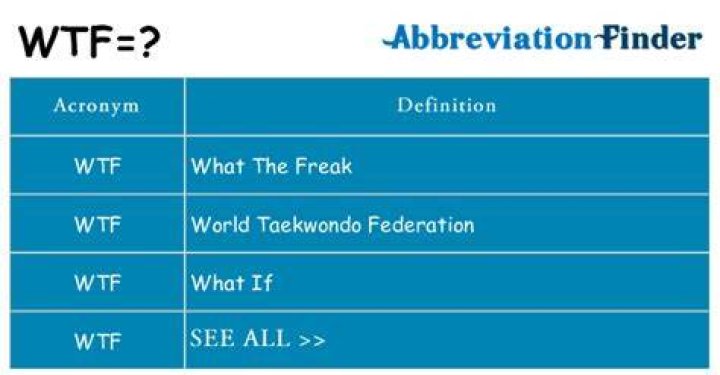
WTF stands for "What The F" – a profane expression of shock, confusion, disbelief, or frustration. It emerged from internet culture in the early 2000s as a way to express strong reactions without typing out the full phrase. What started as internet slang has transcended digital boundaries to become part of everyday vocabulary across generations, professional settings, and global conversations.
The Origin Story of WTF
The phrase "what the f" predates the internet by decades, appearing in American vernacular throughout the 20th century. However, the acronym WTF gained prominence during the rise of online forums and instant messaging in the late 1990s and early 2000s. Early adopters used it on platforms like AOL Instant Messenger, IRC chat rooms, and bulletin board systems.
By 2004, WTF had become common enough that Urban Dictionary entries began documenting its usage. The acronym offered internet users a convenient shorthand that conveyed intense emotion while skirting around explicit language filters that many websites employed. This practical advantage helped cement its place in digital lexicon.
The real explosion came with social media. Twitter's character limits made acronyms valuable real estate. Facebook, Reddit, and Instagram users embraced WTF as a universal reaction. By 2010, the term had crossed into mainstream media, appearing in news articles, television shows, and even corporate marketing campaigns.
How People Actually Use WTF Today
Context changes everything with this versatile acronym. Someone might type "WTF" when their computer crashes unexpectedly. A friend might text it after hearing surprising news. Social media users deploy it in response to bizarre videos or unbelievable headlines. The intensity can range from mild bewilderment to genuine outrage.
Tone matters tremendously. "wtf" in lowercase often suggests playful confusion or mild surprise. "WTF" in capitals indicates stronger emotion – serious shock or anger. Adding punctuation amplifies the reaction: "WTF?!" screams louder than a simple "wtf."
Professional environments present interesting challenges. While some workplaces have adopted casual digital communication styles where WTF appears in internal Slack channels, others maintain strict language policies. Many people navigate this by using the acronym among peers while avoiding it in formal emails or client communications.
Common Variations and Related Acronyms
Internet culture loves to iterate. WTF has spawned numerous variations that modify its meaning or intensity:
- WTAF – "What The Actual F" – emphasizes extra disbelief or frustration
- WTH – "What The Heck" or "What The Hell" – a milder alternative suitable for wider audiences
- WTFF – adds an extra "F" for emphasis when regular WTF isn't strong enough
- WTF BBQ – a humorous extension that originated from online gaming communities, adding random absurdity
- OMGWTF – combines "Oh My God" with WTF for maximum dramatic effect
Each variation serves a specific communicative purpose. Choosing between them depends on your audience, the situation, and how strongly you want to express your reaction.
The Psychology Behind Using Acronyms Like WTF
Why do people prefer typing three letters instead of spelling out their thoughts? Linguistic researchers have identified several factors. Speed ranks high – acronyms let us match the pace of our thoughts during rapid-fire digital conversations. Emotional distance also plays a role. Using "WTF" creates a buffer between the speaker and raw profanity, making the expression feel slightly less vulgar.
There's also a tribal element. Using internet acronyms signals membership in digital culture. When someone types "WTF," they're not just expressing confusion – they're speaking a shared language that marks them as internet-literate. This social signaling happens unconsciously but powerfully shapes online identity.
Interestingly, research on digital communication shows that acronyms like WTF can actually intensify emotional expression rather than diminish it. The brevity creates impact. Three capital letters on a screen can feel more emphatic than a full sentence.
Cultural Impact and Global Adoption
WTF has achieved something remarkable: global recognition despite originating in English-speaking internet communities. Non-English speakers worldwide understand and use WTF, often without translation. It functions almost like an emoji – a universal symbol transcending language barriers.
The acronym appears in international memes, global news discussions, and cross-cultural social media exchanges. A user in Tokyo, São Paulo, or Berlin can type "WTF" and be understood by virtually anyone online. This linguistic reach is unusual for slang terms, which typically remain bound to specific cultural contexts.
Marketing departments have noticed. Brands targeting younger demographics occasionally incorporate WTF into campaigns, walking the fine line between edgy relevance and inappropriate language. Some companies have even trademarked WTF-related phrases for products and services.
When to Use WTF (and When to Avoid It)
Knowing when WTF is appropriate requires social awareness. Among friends in casual text conversations? Perfectly fine for most people. In social media comments responding to news or entertainment? Common practice. In gaming communities, forums, or Reddit threads? Expected and unremarkable.
But certain situations demand restraint. Job applications, professional emails to supervisors, communications with clients, formal presentations, academic papers, and conversations with people you don't know well all typically fall into WTF-free zones. Many educational institutions and workplaces maintain explicit guidelines about appropriate digital communication.
Age dynamics matter too. Using WTF with peers who understand internet culture differs from using it around parents, grandparents, or authority figures who might find it disrespectful. Cultural backgrounds influence these boundaries significantly.
The Evolution of Digital Language
WTF represents a broader shift in how humans communicate. The internet has accelerated language evolution, creating new words and phrases at unprecedented rates. What once took generations now happens in months. Acronyms, emoji, memes, and slang terms emerge, spread globally, and sometimes fade away faster than traditional dictionaries can track them.
Yet some expressions stick. WTF has demonstrated remarkable staying power, remaining relevant for over two decades – an eternity in internet time. This longevity suggests it fills a genuine communicative need. The phrase captures a specific emotional state – that moment of utter confusion or disbelief – with unmatched efficiency.
Linguists studying digital communication note that acronyms like WTF aren't destroying language, as critics sometimes claim. They're expanding it, giving people more tools to express themselves in different contexts. Just as formal written English differs from casual speech, digital communication has developed its own legitimate conventions.
Frequently Asked Questions
Is WTF considered rude or offensive?
It depends entirely on context. WTF contains profanity, so many people do find it offensive, particularly in formal or professional settings. However, among friends or in casual online spaces, it's widely accepted as standard internet language. The key is understanding your audience and environment. When in doubt, opt for milder alternatives like WTH (What The Heck) or simply spell out your confusion without acronyms.
Can I use WTF in professional work messages?
Generally, no – at least not in formal communications. While some relaxed workplaces with casual cultures might tolerate WTF in internal chat channels among peers, it's risky in emails, presentations, client communications, or messages to superiors. Professional environments typically expect more restrained language. Save WTF for personal conversations outside work unless you're absolutely certain your workplace culture accepts it.
What are good alternatives to WTF if I want to avoid profanity?
Several options exist depending on how much emphasis you need. "WTH" (What The Heck/Hell) offers similar impact with less offense. "Seriously?" or "Really?" work for mild situations. "I'm confused" or "That's surprising" provide professional alternatives. For text messages, emoji like 😳 or 🤔 can convey similar bewilderment without words. "Wait, what?" captures the confusion element while remaining family-friendly. Choose based on your audience and the situation's formality.
Why do people type WTF in all caps versus lowercase?
Capitalization indicates intensity. "wtf" in lowercase suggests casual surprise or playful confusion – you're puzzled but not angry. "WTF" in capitals shows stronger emotion, genuine shock, or frustration. "WTF!!!" with punctuation cranks the intensity even higher. This capitalization convention applies broadly across internet language. It's similar to how shouting in person differs from speaking normally. Digital natives unconsciously adjust capitalization to match their emotional state.
Has WTF appeared in any official dictionaries?
Yes. Several respected dictionaries now include WTF. Oxford English Dictionary added it in 2017, marking its transition from pure slang to recognized English vocabulary. Merriam-Webster and Cambridge Dictionary also include entries for WTF. These inclusions acknowledge that internet acronyms have become legitimate parts of modern English, reflecting actual usage rather than prescribing proper language. Dictionary inclusion doesn't necessarily make WTF appropriate in all contexts, but it does validate its place in contemporary communication.
Final Thoughts
Three letters. Countless reactions. WTF has evolved from internet shorthand into a cultural phenomenon that transcends digital boundaries. It captures those moments when reality surprises, confuses, or frustrates us beyond polite expression. Whether you love it, hate it, or use it daily, WTF represents how technology reshapes human communication.
The acronym's persistence suggests it's here to stay. As long as people encounter surprising situations and need quick ways to express disbelief online, WTF will remain part of our linguistic toolkit. Understanding what it means and when to use it helps navigate modern digital communication – a skill increasingly essential in our connected world.
Language keeps changing. New acronyms will emerge. Some will fade while others take their place alongside WTF in the digital lexicon. But for now, these three letters effectively communicate a very human reaction that everyone understands, regardless of where they're from or what language they speak. That's powerful for such a simple combination of characters.