Trapped in the Backrooms with Michael Myers: A Horror Phenomenon
 Sophia Aguilar
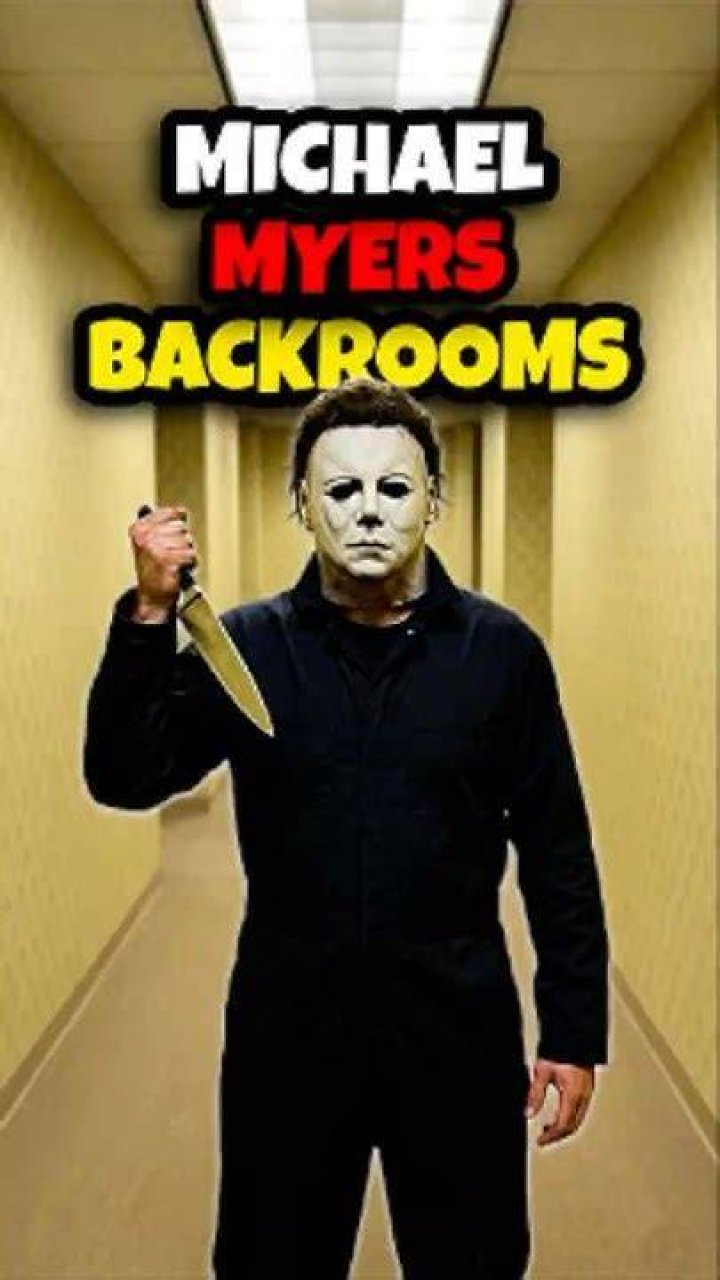
 The internet has birthed countless horror concepts, but few capture pure dread quite like the idea of being trapped in the backrooms with Michael Myers. This terrifying scenario merges two distinct horror phenomena: the endless, yellow-tinted maze of liminal spaces known as the backrooms, and the relentless killer from the Halloween franchise. What started as creative fan fiction has evolved into a full-fledged subgenre of horror content across YouTube, TikTok, and gaming platforms.
The concept taps into primal fears that resonate deeply with modern audiences. Imagine wandering through infinite, monotonous rooms—the hum of fluorescent lights your only companion—when suddenly you realize you're not alone. Michael Myers, the embodiment of unstoppable evil, stalks these corridors. There's no escape route. No help coming. Just endless hallways and a killer who never stops.
Understanding the Backrooms Phenomenon
The backrooms originated from a 2019 4chan post featuring an unsettling image of empty office space with yellowish wallpaper and buzzing lights. The accompanying text described accidentally "noclipping" out of reality into this alternate dimension. Since then, the backrooms have expanded into a complex mythology with multiple levels, each more dangerous than the last.
Level 0, the most recognized backrooms level, consists of approximately 600 million square miles of randomly segmented rooms. The carpet reeks of mold. The lights flicker constantly. Time loses meaning. Some explorers report hearing footsteps that aren't their own. Others encounter entities—twisted creatures that shouldn't exist.
This setting alone generates substantial unease. Add Michael Myers to the equation, and the horror amplifies exponentially. Unlike backrooms entities that might be avoided or reasoned with, Myers represents inevitability. He doesn't run, yet he always catches up. He doesn't speak, making his intentions unknowable. He simply exists to kill.
Why Michael Myers Fits the Backrooms
Michael Myers isn't just another slasher villain. His character embodies something uniquely suited to the backrooms environment. Director John Carpenter designed him as "The Shape"—pure evil without motivation or humanity. This quality makes him perfect for liminal spaces where normal rules don't apply.
In traditional Halloween films, Myers stalks suburban neighborhoods. He knows the layout. He plans. He waits. But in the backrooms, these tactics become even more nightmarish. The infinite corridors give him unlimited hunting ground. The monotonous environment means victims can't landmark navigate or find hiding spots. Every turn looks identical. Every room offers the same false hope of safety.
Content creators have recognized this synergy. Hundreds of videos now explore this scenario through found footage, animation, and gaming mods. One popular YouTube video exceeded three million views by depicting a first-person perspective of someone hearing breathing behind them in Level 0, only to turn and see Myers standing motionless at the end of a hallway.
The Psychology Behind the Terror
Why does this specific combination work so effectively? Psychologists who study fear explain that humans respond strongly to two types of threats: the unknown and the inescapable. The backrooms represent the unknown—a space that defies logic and natural law. Michael Myers represents the inescapable—a force that cannot be reasoned with, fought, or outrun permanently.
Dr. Frank McAndrew, a professor who studies creepiness, notes that ambiguous threats create more sustained anxiety than clear dangers. The backrooms provide constant ambiguity. Is that shadow Myers, or just poor lighting? Was that sound his footsteps, or the building settling? This sustained uncertainty keeps the nervous system activated far longer than a simple jump scare.
The liminal nature of the backrooms also triggers discomfort. Liminal spaces—transitional areas like empty malls, hotel hallways, or office buildings after hours—feel wrong because we expect them to be populated. Our brains register these empty spaces as unnatural. Something should be there. When that something turns out to be Michael Myers, the violation of expectation creates powerful fear responses.
Popular Interpretations and Content
The trapped in the backrooms with Michael Myers concept has spawned diverse creative interpretations. Gaming communities have modded titles like Garry's Mod and Roblox to recreate the experience. Players spawn in Level 0 and must survive while Myers hunts them. The games typically include stamina mechanics, limited visibility, and the constant threat of hearing his breathing grow closer.
YouTube creators produce short films and POV experiences. These videos often use VHS-style filters to enhance the found footage aesthetic. The most effective ones understand pacing—long stretches of wandering interrupted by brief glimpses of Myers. Some never show him directly, only suggesting his presence through sounds and shadow movements.
TikTok has embraced the concept through shorter, punchier content. Creators use the platform's duet and stitch features to build collaborative narratives. One person might post a video of exploring the backrooms, and another responds with footage of Myers following behind. These collaborative stories engage communities in shared storytelling.
Fan fiction writers have developed elaborate scenarios exploring different outcomes. Some stories focus on survival tactics—attempting to lose Myers in the maze-like structure or finding weapons in deeper backrooms levels. Others take philosophical approaches, questioning whether Myers himself might be trapped, doomed to wander these halls eternally searching for victims who may not exist.
Key Elements That Define This Horror Subgenre
- Atmospheric tension over jump scares: The best content builds dread through sound design and visual cues rather than cheap shocks.
- First-person perspective: POV footage immerses viewers in the experience, making them feel like the potential victim.
- Minimalist storytelling: These narratives work best with minimal dialogue, letting environments and situations speak for themselves.
- Authentic backrooms aesthetics: Successful content respects established backrooms lore—the yellow wallpaper, fluorescent lighting, and endless monotony.
- Myers' classic behavior: The slasher maintains his characteristic slow, methodical stalking rather than breaking into supernatural speed or abilities.
- Isolation emphasis: The horror intensifies when victims realize no help exists in this dimension—they're completely alone with the threat.
How This Concept Reflects Modern Anxiety
Horror always reflects cultural anxieties. The trapped in the backrooms with Michael Myers phenomenon speaks to contemporary fears that differ from traditional slasher concerns. In the 1970s and 80s, Halloween films explored suburban danger and the failure of authority figures to protect us. This new iteration explores different terrors.
The backrooms symbolize modern disconnection and digital-age alienation. These spaces feel corporate, impersonal, and endless—much like navigating bureaucratic systems or social media algorithms. You can wander forever without finding meaningful connection or escape. Adding Myers transforms this existential dread into immediate physical danger.
The scenario also reflects pandemic-era experiences. Months of isolation, empty public spaces, and the feeling of inescapable threat parallel the backrooms experience. The virus, like Myers, didn't negotiate or show mercy. It simply existed as a force to be avoided. This parallel may explain why backrooms content surged in popularity during 2020-2022.
Climate anxiety plays a role too. The backrooms exist in perpetual artificial lighting, cut off from nature and normal day-night cycles. This eternal indoor existence mirrors fears about environmental collapse and disconnection from the natural world. Myers becomes the personification of consequences we cannot escape, no matter how far we run.
Creating Your Own Backrooms Horror Content
For creators interested in exploring this concept, several principles enhance effectiveness. Sound design matters enormously. The backrooms' ambient noise—buzzing lights, distant humming, carpet creaks—establishes atmosphere. Myers' breathing, his footsteps, and the Halloween theme (used sparingly) provide iconic audio cues audiences recognize instantly.
Lighting requires careful balance. Too dark, and viewers can't see what's happening. Too bright, and the backrooms lose their unsettling quality. The fluorescent lighting should feel harsh yet somehow inadequate, creating pools of shadow where Myers might lurk.
Pacing separates good content from great. Twenty minutes of wandering empty halls tests patience. But strategic placement of escalating threats—a distant figure, a closer sighting, a near encounter—builds tension that pays off. The best creators understand that showing less of Myers makes him more frightening.
Respect for source material matters. Audiences familiar with Halloween films expect Myers to behave consistently. He doesn't teleport (usually). He doesn't speak. He doesn't run at full sprint. Breaking these rules might seem creative but often diminishes the character's impact. Similarly, backrooms content works best when it honors established lore rather than inventing contradictory mythology.
Frequently Asked Questions
What exactly are the backrooms?
The backrooms are a creepypasta concept describing an alternate dimension of endless, monotonous rooms that people accidentally enter by "noclipping" out of reality. Level 0, the most famous level, consists of yellow wallpaper, moist carpet, and fluorescent lighting. The space extends for hundreds of millions of square miles with no clear exit. Various entities inhabit different levels, and wanderers risk dehydration, starvation, or worse if they can't escape.
Why is Michael Myers particularly scary in the backrooms?
Michael Myers excels as a threat in the backrooms because his character traits align perfectly with the environment's horror. His slow, relentless pursuit becomes more terrifying in infinite hallways where victims can't outrun him indefinitely. His silence and lack of expression amplify the backrooms' existing isolation. Since the backrooms already disorient and exhaust victims, Myers doesn't need to rush—he simply has to maintain pursuit until exhaustion makes escape impossible.
Is there any official Halloween content involving the backrooms?
No official Halloween franchise content incorporates the backrooms. This concept exists entirely within fan-created content, including videos, games, art, and fiction. The Halloween rights holders have not produced any movies, games, or media exploring this scenario. All trapped in the backrooms with Michael Myers content comes from independent creators and fans who combine these two horror properties through transformative works.
Can you actually survive being trapped in the backrooms with Michael Myers?
In the fictional scenarios creators explore, survival seems nearly impossible but not entirely hopeless. Theoretical survival strategies include reaching deeper backrooms levels (though many are more dangerous), finding rare exits, discovering weapons or tools, or potentially hiding long enough for Myers to lose track. Some fan theories suggest that because the backrooms are infinite, one might survive indefinitely through constant evasion, though this seems psychologically unsustainable. Most narratives acknowledge that escape represents the only real survival option.
What other horror characters work well in the backrooms?
Several horror icons translate effectively to backrooms scenarios. Freddy Krueger's reality-bending abilities suit the dimension's dreamlike quality. The xenomorph from Alien benefits from the tight corridors and air duct systems. SCP-173 (the statue that moves when unobserved) creates interesting dynamics with the backrooms' long sightlines. However, Michael Myers remains perhaps the most popular choice because his grounded, human appearance contrasts sharply with the surreal environment while his supernatural persistence matches the backrooms' endless nature.
Final Thoughts
The concept of being trapped in the backrooms with Michael Myers represents something larger than simple crossover fan fiction. It's a legitimate evolution of horror storytelling that combines analog nostalgia with digital-age anxiety. The scenario works because both elements—the backrooms and Myers—represent different aspects of inescapable dread that resonate with contemporary audiences.
As horror continues evolving, these kinds of creative combinations will likely increase. The internet enables rapid sharing and iteration of ideas, allowing concepts like this to develop entire ecosystems of content within months. Whether through games, videos, art, or writing, creators keep finding new angles to explore the basic premise: what happens when you can't escape, and the thing hunting you never stops?
For fans of psychological horror, liminal spaces, and classic slashers, this subgenre offers rich territory. It proves that horror remains vital and adaptive, finding fresh ways to trigger our deepest fears. The backrooms provide the setting. Michael Myers provides the threat. Our imaginations provide the terror that keeps us watching, creating, and wondering what we'd do if we ever heard that breathing behind us in those endless yellow halls.