The Lion King Songs: Hidden Meanings Behind the Iconic Soundtrack
 Sarah Rowe
 When "Circle of Life" thunders through speakers with those opening Zulu chants, something primal stirs inside us. The Lion King's soundtrack doesn't just accompany the story—it carries profound meanings that resonate across cultures and generations. Each song serves as a philosophical statement wrapped in melody, tackling themes of mortality, responsibility, identity, and redemption with a sophistication that transcends typical children's entertainment.
Composed by Elton John with lyrics by Tim Rice, and featuring traditional African elements by Lebo M, the soundtrack became a cultural phenomenon that earned multiple awards including an Academy Award and a Grammy. But beneath the catchy tunes lies a tapestry of symbolism drawn from African philosophy, Shakespearean tragedy, and universal human experiences that give these songs their enduring power.
Circle of Life: The Philosophy of Interconnectedness
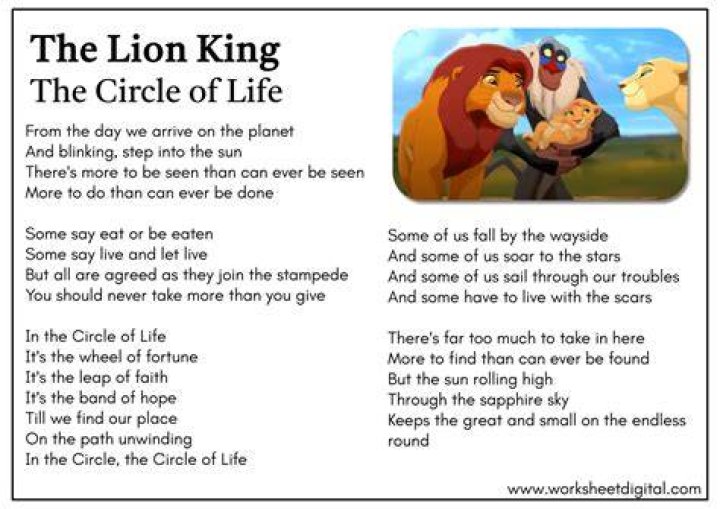
"Circle of Life" opens the film with Rafiki presenting Simba to the animal kingdom. The song's meaning extends far beyond a simple birth announcement. It articulates the African concept of Ubuntu—the belief that our humanity is intertwined with others. "From the day we arrive on the planet" immediately establishes life as a shared journey rather than an individual pursuit.
The lyrics acknowledge both abundance and scarcity: "There's more to see than can ever be seen, more to do than can ever be done." This paradox captures the human condition perfectly. We're blessed with infinite possibilities yet constrained by finite time. The "wheel of fortune" metaphor recognizes life's unpredictability while suggesting a larger order governs existence.
What makes this song particularly powerful is its refusal to sugarcoat reality. "Some of us fall by the wayside, and some of us soar to the stars" accepts inequality and different outcomes without judgment. The circle continues regardless, and we're all part of it whether we rise or fall.
I Just Can't Wait to Be King: Youthful Naivety and Power
Simba's enthusiastic anthem reveals the innocence—and ignorance—of youth confronting power. The young cub imagines kingship as pure freedom without responsibility. "No one saying 'do this,' no one saying 'be there'" shows he views leadership as liberation from rules rather than service to others.
The song's meaning becomes darker in hindsight. Simba's wish to be king foreshadows Mufasa's death, making his childish excitement tragically ironic. He has no concept of the grief and guilt that will accompany his actual ascension. The vibrant, chaotic energy of the musical number contrasts sharply with the somber reality of leadership he'll later face.
Zazu's futile attempts to maintain order during the song mirror society's struggle to guide youth who aren't ready to listen. The hornbill represents tradition and wisdom that young Simba dismisses as buzzkill behavior. Only through trauma will he understand what Zazu was trying to teach.
Be Prepared: The Seduction of Fascism
Scar's villain song stands out as one of Disney's darkest musical numbers. "Be Prepared" doesn't just reveal his plot—it demonstrates how authoritarian leaders manipulate followers through grievance and promises of restored glory. The hyenas represent a marginalized underclass that Scar exploits with rhetoric about finally getting their "share."
The military imagery and goose-stepping visuals deliberately evoke Nazi rallies. Scar promises the hyenas they'll "be prepared for the coup of the century," but his actual plan offers them nothing beyond the satisfaction of revenge. This parallels how fascist movements mobilize people with anger while concentrating power in one individual.
The song's meaning extends to workplace politics and social hierarchies. Scar's intelligence and eloquence don't make him a good leader—they make him a dangerous one. He understands systems well enough to corrupt them. His complaint about being passed over despite his "brains" resonates with anyone who's felt unfairly overlooked, making his villainy disturbingly relatable.
Hakuna Matata: Escapism Versus Healing
"Hakuna Matata" means "no worries" in Swahili, but the song's deeper meaning is more complex than simple carefree living. When Timon and Pumbaa introduce this philosophy to traumatized Simba, they're offering him an escape from unbearable guilt. The phrase becomes a coping mechanism—not necessarily a healthy one.
The song works as trauma response. Simba can't process his father's death or face his perceived responsibility, so he adopts a worldview that dismisses all problems as meaningless. "It's our problem-free philosophy" sounds cheerful, but it's actually emotional avoidance. He's not healing; he's hiding.
Pumbaa's backstory about being ostracized for his smell adds poignancy. The warthog found genuine acceptance with Timon after society rejected him. For Pumbaa, "Hakuna Matata" represents authentic freedom from others' judgment. For Simba, it's procrastination from destiny. Same words, different meanings depending on context—a subtle lyrical achievement.
Can You Feel the Love Tonight: Awakening and Conflict
Elton John's power ballad captures the bittersweet nature of romantic love interrupting a comfortable existence. When Simba and Nala reconnect, their romance threatens the "problem-free" life he's built. Timon and Pumbaa narrate their own concerns: "And if he falls in love tonight, it can be assumed his carefree days with us are history."
The song's meaning revolves around love as a catalyst for growth. Nala's presence forces Simba to confront everything he's been avoiding. She represents his past, his identity, and his responsibilities—everything "Hakuna Matata" helped him forget. The romance is beautiful but disruptive, which is precisely what Simba needs.
The lyric "The sweet caress of twilight, there's magic everywhere" acknowledges that this moment exists outside normal time. It's an interlude before difficult decisions must be made. The lovers experience perfect connection while two worlds—his exile and his kingdom—wait to collide.
Cultural Authenticity: Lebo M's Contribution
South African composer Lebo M provided the African vocal elements that give The Lion King's music its authentic power. The opening chant "Nants ingonyama bagithi baba" translates to "Here comes a lion, Father" in Zulu. This wasn't mere exotic decoration—it grounded the entire soundtrack in actual African musical traditions.
Lebo M's contribution represents cultural consultation done right. Rather than white composers appropriating African sounds, they collaborated with someone who could bring genuine knowledge and artistry. The result sounds authentic because it is, blending Western theatrical composition with African choral traditions that carry their own rich meanings.
The layered vocal harmonies throughout the soundtrack reflect African communal singing traditions where multiple voices create something greater than individual performances. This musical approach reinforces the film's themes about interconnectedness and community—form and content working together.
Benefits and Cultural Impact
The Lion King soundtrack introduced millions of people worldwide to African musical elements and Swahili language. Children who grew up with these songs absorbed ideas about ecological balance, communal responsibility, and facing difficult truths—heavy concepts delivered through accessible music.
The songs work on multiple levels simultaneously. Kids enjoy catchy melodies and funny moments. Adults recognize deeper themes about mortality, duty, and redemption. This layered approach respects audience intelligence regardless of age, treating children as capable of handling complex emotions through metaphor.
From a therapeutic perspective, these songs provide language for difficult experiences. "Circle of Life" helps explain death to children. "Hakuna Matata" validates the impulse to escape pain while the broader story shows why we must eventually face it. The soundtrack becomes an emotional education tool wrapped in entertainment.
Frequently Asked Questions
What does "Circle of Life" really mean?
The song expresses the African philosophy of interconnectedness, teaching that all living things are part of a continuous cycle. It addresses birth, death, struggle, and acceptance of life's inherent patterns. The "circle" represents how energy and matter transfer between organisms in ecosystems, but also speaks to generational continuity and the idea that our actions affect the whole community. It's both ecological science and spiritual philosophy presented as a welcoming anthem.
Why is "Hakuna Matata" problematic as life advice?
"Hakuna Matata" works as temporary trauma response but fails as permanent philosophy. In the film, Simba uses it to avoid confronting his past and responsibilities. While the song sounds joyful and liberating, it enables him to abandon his kingdom and shirk his role in the circle of life. The movie ultimately shows that running from problems doesn't solve them. The phrase has value for reducing anxiety about things we can't control, but becomes destructive when applied to things we should address.
What makes "Be Prepared" so disturbing?
Scar's song deliberately mirrors fascist propaganda techniques—exploiting grievances, promising restoration of former glory, and using militaristic imagery to inspire followers. The hyenas are manipulated into supporting a leader who views them as disposable tools. The song's meaning extends beyond the story to illustrate how charismatic individuals exploit marginalized groups with empty promises while consolidating power. Its darkness stands out in Disney's catalog because it portrays the seductive appeal of authoritarian rhetoric without softening the message.
Musical Legacy and Continuing Relevance
Three decades after its release, The Lion King's soundtrack continues resonating because it tackled timeless human struggles through specific cultural expression. The songs don't feel dated because they address fundamental questions every generation faces: How do we handle loss? When should we embrace responsibility? What do we owe our communities?
The Broadway adaptation expanded several songs, adding depth to characters like Nala with "Shadowland" and giving Mufasa "They Live in You." These additions proved the original musical foundation could support even more philosophical exploration. The songs became frameworks for examining duty, identity, and connection.
Hans Zimmer's instrumental score deserves mention for how it complements the lyrical themes. His music evokes African landscapes while maintaining emotional accessibility for global audiences. The combination of Zimmer's orchestration, John and Rice's songwriting, and Lebo M's cultural authenticity created something that honors African artistic traditions while achieving mainstream success—a difficult balance executed brilliantly.
Final Thoughts
The Lion King's songs endure because they respect their audience enough to tackle difficult subjects honestly. They present death, trauma, manipulation, and responsibility without flinching, trusting that emotional truth delivered through beautiful music will resonate across cultures and age groups. Each song carries multiple layers of meaning that reveal themselves at different life stages—what you hear as a child differs from what you understand as a parent.
Understanding the deeper meanings behind these songs doesn't diminish their entertainment value. If anything, recognizing the philosophical sophistication woven into seemingly simple lyrics deepens appreciation for the artistry involved. The soundtrack works because it's both profound and accessible, serious and joyful, culturally specific and universally human. That's not just good songwriting. That's music doing what it does best—helping us understand ourselves and each other a little better.