Holy Sht He's Right: Blue Lock's Viral Philosophy Explained
 Rachel Ellis
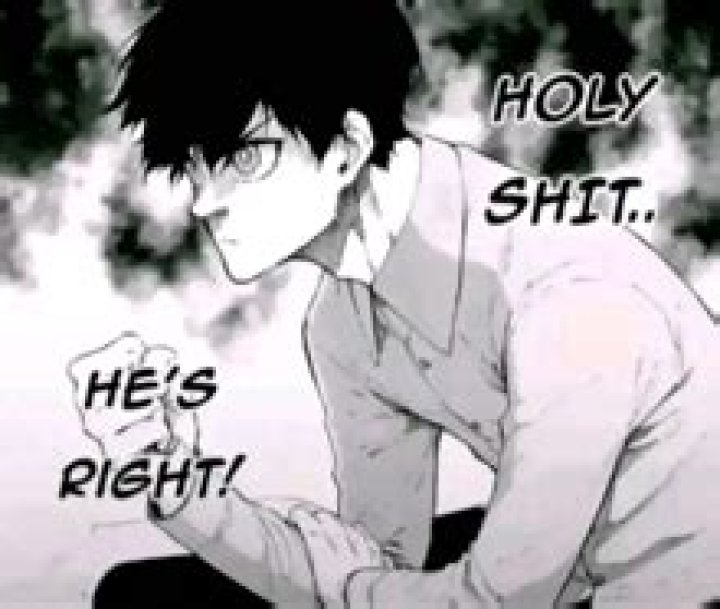
 A single line from the soccer anime Blue Lock has ignited thousands of online discussions, spawning countless memes and think pieces across social media platforms. "Holy sht, he's right" captures the exact moment viewers realize that Ego Jinpachi's radical philosophy about strikers isn't just anime drama—it's a legitimate critique of how modern soccer culture often suppresses individual brilliance in favor of collective mediocrity. The phrase has transcended its source material, becoming shorthand for any moment when an unconventional idea suddenly clicks into place.
Blue Lock premiered in October 2022, based on Muneyuki Kaneshiro's manga illustrated by Yusuke Nomura. The series presents a controversial premise: Japan's national team creates an experimental training facility designed to produce the world's most selfish striker. What separates this from typical sports anime isn't just the ruthless competition, but the philosophical framework that makes viewers question everything they thought they knew about teamwork in sports.
The Revolutionary Philosophy That Sparked a Movement
Ego Jinpachi serves as the architect of Blue Lock, a coach whose methods initially seem absurd. He argues that Japan fails at soccer because the culture prioritizes harmony over individual excellence. According to his theory, every World Cup winner had a striker who was fundamentally selfish—someone who believed they were the best on the field and played accordingly. Cristiano Ronaldo. Lionel Messi. These players didn't succeed by being team players first; they dominated because they possessed an ego that refused to be contained.
The "holy sht he's right" moment typically occurs when viewers recognize this pattern in real soccer history. Ego isn't advocating for players who ignore their teammates. He's demanding strikers who take responsibility for winning, who see scoring opportunities others miss, who have the audacity to shoot when conventional wisdom says to pass.
This philosophy crashes against traditional Japanese values that emphasize group harmony. The series doesn't shy away from this cultural tension. Instead, it weaponizes the conflict, forcing characters and viewers to confront uncomfortable questions about whether politeness and deference actually hold back exceptional talent.
Why This Resonates Beyond Anime Fans
The viral spread of "holy sht he's right" reveals something deeper than appreciation for a well-written anime. People from various professional backgrounds have applied Ego's framework to their own fields. Entrepreneurs quote the series when discussing why collaborative culture sometimes stifles innovation. Artists reference it when explaining why they stopped seeking committee approval for creative decisions.
Blue Lock taps into a universal frustration: the experience of watching your best ideas get diluted by groupthink. The series validates the feeling that sometimes—not always, but sometimes—the lone wolf approach produces better results than endless compromise. This message resonates particularly with younger audiences who've grown skeptical of corporate team-building exercises that prioritize conflict avoidance over actual achievement.
Social media analytics show that clips of Ego's speeches generate significantly higher engagement than typical anime content. TikTok videos dissecting his philosophy regularly surpass a million views. The hashtag #HolyShitHesRight has been used across contexts far removed from soccer or anime, applied to everything from business strategy to relationship advice.
The Key Moments That Define the Series
Several scenes in Blue Lock crystallize Ego's philosophy in ways that stick with viewers long after the credits roll. The first selection process eliminates the weakest player from each team, immediately establishing that mediocrity won't be protected by group dynamics. Players who pass when they should shoot get punished. Those who trust their instincts and take risks advance.
One particularly powerful sequence shows protagonist Yoichi Isagi realizing he's been playing "nice" his entire career. He's been the player who sets up goals for teammates, who makes the safe pass, who never demands the ball. Blue Lock forces him to acknowledge that this approach, while admirable, has prevented him from becoming truly great. The camera lingers on his face as this realization hits—and viewers experience their own "holy sht" moment alongside him.
The series doesn't present this transformation as purely positive. Characters lose friendships. They become obsessed. Some develop tunnel vision that actually makes them worse players. Blue Lock shows both the power and danger of unchecked ego, creating nuance that prevents the philosophy from feeling like simple wish fulfillment.
Critical Reception and Cultural Impact
Blue Lock manga sales exploded following the anime adaptation, with over 30 million copies in circulation by 2024. The series consistently trends on streaming platforms, particularly during new episode releases. Critics have praised its willingness to challenge sports anime conventions while noting that the animation quality occasionally fails to match the intensity of the source material.
Professional soccer analysts have weighed in on Ego's theories with mixed responses. Some argue the series oversimplifies team dynamics and ignores how elite strikers actually depend on sophisticated support systems. Others appreciate how it highlights the importance of confidence and decision-making in high-pressure situations. The debate itself has introduced soccer tactical discussion to anime communities and brought anime storytelling techniques to sports analysis channels.
Japanese cultural critics have examined how Blue Lock reflects generational shifts in attitudes toward individualism. The series arrived during ongoing conversations about work culture, corporate loyalty, and whether traditional collectivist values still serve younger generations. Whether intentionally or not, Blue Lock entered this dialogue with a clear position.
How Blue Lock Changed Sports Anime
Prior to Blue Lock, most soccer anime followed predictable patterns. Underdogs work hard, believe in their friends, and triumph through teamwork. Goals come from perfect passing sequences that showcase collaboration. The genre rarely questioned whether this formula actually reflected how excellence develops in competitive environments.
Blue Lock shattered these expectations by making individual development the explicit goal. Training doesn't focus on building team chemistry—it focuses on forcing each player to evolve or be eliminated. The protagonist doesn't win by bringing his team together. He wins by becoming selfish enough to take the shot himself.
This shift has influenced subsequent sports anime and manga. New series show more willingness to explore competitive psychology, to acknowledge that teammates can be obstacles as much as assets, to examine the costs of prioritizing team harmony over individual excellence. Blue Lock proved audiences were hungry for sports stories with sharper edges.
The Philosophy Applied to Real Life
Viewers have extracted practical lessons from Blue Lock's philosophy, applying them to careers, creative pursuits, and personal development. The core insight—that excessive deference to others can prevent you from reaching your potential—resonates across contexts. Job candidates report feeling empowered to negotiate harder after watching the series. Freelancers describe saying no to unprofitable collaboration requests.
However, the series also demonstrates the limits of pure selfishness. Characters who become completely self-absorbed plateau or break down. The most successful players in Blue Lock eventually learn to use teammates strategically without abandoning their primary drive to score. This nuance gets lost in some viral clips that present Ego's philosophy as absolute rather than situational.
Mental health professionals have noted both positive and negative effects from how audiences interpret the series. Some find it validating to have their ambitions affirmed rather than pathologized. Others develop unhealthy competitive mindsets or use Blue Lock to justify actually antisocial behavior. The series walks a fine line between inspiring confidence and encouraging narcissism.
Frequently Asked Questions
What does "holy sht he's right" mean in Blue Lock context?
The phrase captures the moment viewers realize Ego Jinpachi's controversial philosophy about strikers needing to be selfish actually makes sense when examining real soccer history. It's the point where his arguments stop sounding like anime exaggeration and start feeling like legitimate sports psychology that mainstream coaching ignores.
Is Blue Lock's philosophy actually applicable to real soccer?
Professional opinions vary significantly. Elite strikers do need confidence and willingness to take responsibility for scoring, which aligns with some of Ego's points. However, real soccer requires sophisticated tactical understanding and teamwork that the anime simplifies for narrative purposes. The philosophy contains truth but isn't a complete coaching methodology.
Why has Blue Lock become so popular compared to other soccer anime?
Blue Lock differentiates itself through its willingness to challenge feel-good teamwork narratives and explore uncomfortable truths about competition. The elimination-based structure creates genuine tension, and the philosophical framework gives audiences something to debate beyond match outcomes. It treats viewers as adults capable of engaging with complex ideas about ambition and ego.
Final Thoughts
The viral spread of "holy sht he's right" demonstrates that Blue Lock struck a nerve extending far beyond anime fandom. Ego Jinpachi's philosophy validates feelings many people have experienced but rarely see articulated—that excessive collaboration sometimes produces mediocre results, that politeness can mask fear of standing out, that claiming your space isn't always selfishness. The series packages these ideas in an exciting sports narrative that makes the philosophy feel earned rather than preachy. Whether you agree with every aspect of Ego's approach or not, Blue Lock forces a conversation about how we balance individual excellence with collective effort. That conversation, uncomfortable as it may be, seems worth having.