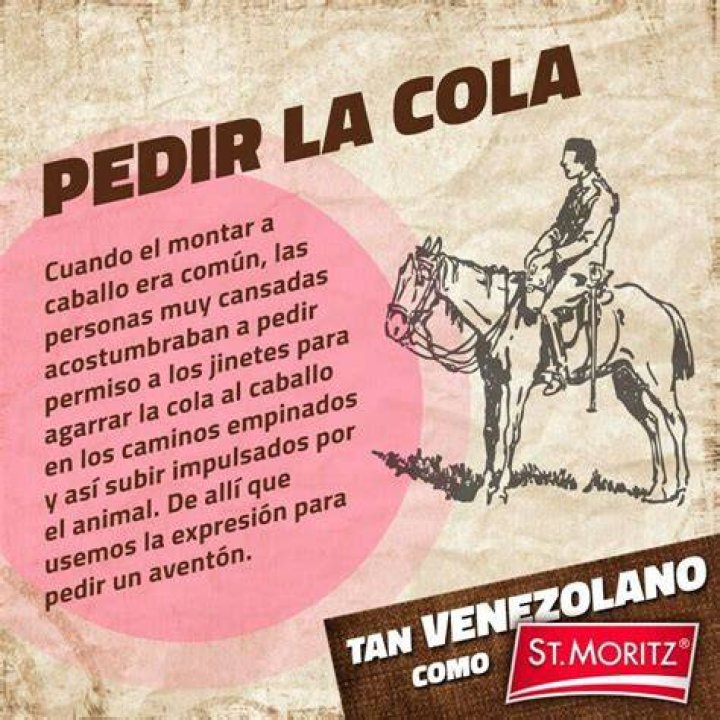
Where Does "Pedir la Cola" Come From in Venezuela?
 John Hall
 Venezuela has a language all its own. Walk through Caracas, Maracaibo, or any Venezuelan city, and you'll hear phrases that don't exist anywhere else in the Spanish-speaking world. "Pedir la cola" ranks among the most distinctive. Literally translated as "asking for the tail," this expression refers to hitchhiking or requesting a ride from strangers. But where did this peculiar term originate?
The phrase carries weight beyond simple transportation. It represents a cultural practice woven into Venezuelan society for decades, reflecting economic realities, social bonds, and the inventive spirit that characterizes daily life in this South American nation. Understanding its origins means understanding Venezuela itself.
The Linguistic Roots of "Cola"
The word "cola" in Spanish typically means "tail" or "glue." In Venezuela, it took on a completely different meaning related to transportation. The term emerged from the visual image of people lining up along roads and highways, forming what resembled a tail or queue waiting for rides. Picture the scene: dozens of Venezuelans standing at strategic points, hands extended, hoping a driver would stop.
This wasn't random. The formation looked like an animal's tail stretching along the roadside. When someone joined this line, they were literally getting "in the tail" or "pidiendo la cola." The metaphor stuck because it perfectly captured the physical reality of the situation.
Language experts trace the expression back to the 1960s and 1970s, though oral traditions suggest it might be older. During this period, Venezuela experienced rapid urbanization. Cities expanded faster than public transportation systems could accommodate. Workers needed ways to reach jobs. Students required transportation to universities. The car became essential, but not everyone could afford one.
Historical Context Behind the Practice
Venezuela's hitchhiking culture didn't emerge in isolation. Several factors converged to make "pedir la cola" a widespread practice rather than an occasional necessity.
The country's oil boom brought wealth, but distribution remained uneven. Middle-class families purchased vehicles while working-class Venezuelans relied on inadequate bus systems. Roads improved dramatically during the petroleum golden years, yet public transit lagged behind. This created the perfect conditions for a ride-sharing culture based on solidarity rather than profit.
Geography played its part. Venezuela stretches across diverse terrain with cities separated by mountains, plains, and coastal regions. Many smaller towns lacked regular bus service. Getting from one place to another often meant standing on the Pan-American Highway with your thumb out, asking drivers for "una cola."
The practice became normalized. Picking up hitchhikers wasn't seen as dangerous or unusual. Families drove with empty seats and felt a social obligation to help fellow citizens. This mutual aid system functioned because Venezuelan society maintained relatively high trust levels during those decades.
How "Pedir la Cola" Works in Practice
The mechanics of asking for a ride in Venezuela follow unwritten but universally understood rules. Location matters enormously. Hitchhikers position themselves at traffic lights, highway entrances, or known pickup points called "colas" where drivers expect to find passengers.
Hand signals communicate destination. A pointed finger indicates direction. Waving motions suggest urgency. Some hitchhikers hold signs with neighborhood names or major intersections. The driver makes a split-second decision based on route compatibility and available space.
Payment customs vary. Short rides within cities are typically free, considered acts of community support. Longer distances might involve small contributions for gas, though this remains informal and negotiable. The system operates on reciprocity—today's driver becomes tomorrow's hitchhiker when their car breaks down.
- Strategic positioning at busy intersections increases success rates
- Morning and evening rush hours see the highest participation
- Women often hitchhike in groups for safety
- Drivers typically prefer passengers going the same direction to avoid detours
- The practice remains more common in cities than rural areas
Economic Factors Driving the Tradition
Venezuela's economic rollercoaster transformed "pedir la cola" from convenience to necessity. When oil prices dropped in the 1980s, the country entered a prolonged crisis. Public transportation deteriorated. Bus frequency decreased. Tickets became unaffordable for many workers.
The hyperinflation that struck Venezuela in recent decades made the practice even more critical. Owning a car became prohibitively expensive. Gasoline, once nearly free due to subsidies, grew scarce. Public transit systems collapsed entirely in some regions. Hitchhiking evolved from a cultural quirk into a survival mechanism.
Students provide a clear example. Universities are often located far from residential neighborhoods. Without functioning metro systems or reliable buses, attending classes requires creative solutions. Asking for rides became standard operating procedure. Entire generations of Venezuelan professionals can trace their education to the kindness of strangers who gave them "una cola" to campus.
Cultural Significance and Social Bonds
The term represents something deeper than transportation logistics. "Pedir la cola" embodies Venezuelan values of community, resourcefulness, and mutual support. It reflects a society where social connections matter more than rigid individualism.
Conversations happen during these rides. Drivers and passengers exchange stories, discuss politics, share advice. These brief encounters create micro-communities. A businesswoman heading downtown might give a college student a ride, bridging class divides that would otherwise never intersect. Knowledge transfers. Networks form. Opportunities arise.
The practice also reveals Venezuelan humor and adaptability. Jokes about hitchhiking permeate popular culture. Musicians reference "la cola" in lyrics. Comedians build routines around memorable ride experiences. The phrase entered the national consciousness as distinctly Venezuelan, a linguistic marker that separates locals from foreigners.
Regional Variations Across Venezuela
Different Venezuelan states developed their own hitchhiking subcultures. In Zulia state, particularly around Maracaibo, hitchhiking protocols differ from Caracas customs. Maracuchos might use different hand signals or pickup locations. The coastal regions near Puerto La Cruz have their own patterns influenced by tourist traffic and beach destinations.
Andean states like Mérida and Táchira adapted the practice to mountainous terrain. Pickup points cluster at the base of steep inclines where cars naturally slow down. Drivers in these regions developed reputations for generosity, understanding that walking mountain roads poses genuine hardship.
The Llanos (plains regions) present unique challenges. Distances between towns stretch for dozens of kilometers. Hitchhikers might wait hours for a single vehicle. Ranch workers and cattle drivers traditionally stop for anyone walking these isolated roads, maintaining traditions predating modern transportation.
Modern Evolution and Current Status
The digital age brought changes. Ride-sharing apps attempted to enter the Venezuelan market, though economic instability limited their success. Some Venezuelans now use WhatsApp groups to coordinate rides, modernizing "pedir la cola" while maintaining its community spirit.
Safety concerns increased as economic conditions worsened. Crime rates climbed, making both drivers and hitchhikers more cautious. The once-common practice of stopping for any stranger became riskier. Trust eroded alongside economic stability. Many drivers now only pick up women, elderly people, or passengers who appear particularly desperate.
The massive Venezuelan migration wave since 2015 spread the term internationally. Venezuelan communities in Colombia, Peru, Chile, and other countries brought "pedir la cola" with them. The phrase now appears in regional Spanish across Latin America, usually with an acknowledgment of its Venezuelan origins.
Comparing Venezuelan Hitchhiking to Other Countries
Most Spanish-speaking countries use "hacer dedo" (making finger) for hitchhiking, derived from the thumb gesture. Venezuela's unique terminology sets it apart linguistically and culturally. While hitchhiking exists worldwide, few places integrated it so completely into daily life.
Cuba shares some similarities. Cuban "botella" (bottle) refers to informal ride-sharing necessitated by transportation shortages. Both systems emerged from economic constraints and evolved into cultural practices. The key difference? Cuba's government formally organized ride-sharing at certain points, while Venezuela's system remained grassroots and organic.
European hitchhiking culture, popular in the 1960s and 1970s, emphasized adventure and counterculture. Venezuelan "cola" always centered on practical necessity rather than romantic travel ideals. It was never optional or bohemian—it was how people got to work.
Frequently Asked Questions
Is "pedir la cola" still common in Venezuela today?
Yes, though the practice has declined in major cities due to safety concerns. It remains prevalent in smaller towns and among trusted networks. Economic hardship keeps the tradition alive out of necessity. Some Venezuelans now arrange rides through social media rather than standing on street corners, adapting the concept to digital tools while maintaining its cooperative essence.
Why don't Venezuelans just say "hitchhiking" or use the standard Spanish term?
Language reflects culture. "Pedir la cola" emerged organically from Venezuelan experience and describes something more specific than generic hitchhiking. The term encompasses the social protocols, locations, hand signals, and community expectations unique to Venezuela. Using "hacer dedo" would feel foreign, like adopting someone else's tradition rather than honoring your own.
Do drivers expect payment when someone asks for "una cola"?
Traditional etiquette says no. Short urban rides are considered neighborly favors. Longer intercity trips might involve voluntary contributions for gasoline, but demanding payment violates the spirit of the practice. The system relies on reciprocity and community goodwill rather than commercial transaction. That said, economic crisis has blurred these lines, with some drivers now expecting small payments even for short distances.
Final Thoughts
The phrase "pedir la cola" tells Venezuela's story through three simple words. It speaks to ingenuity, community bonds, and the creative solutions people develop when formal systems fail them. What started as a practical response to inadequate transportation became a cultural marker, a linguistic fingerprint that identifies Venezuelan Spanish as distinct.
Understanding where this term comes from means grasping how Venezuelans navigate their world. The expression survives because it names something real—a daily experience shared across generations and social classes. Whether the practice thrives or fades in coming years, "pedir la cola" has already secured its place in Venezuelan identity, a reminder that language grows from lived experience rather than textbooks.
Next time you hear a Venezuelan mention "la cola," you'll know they're referencing more than a simple ride. They're invoking decades of shared struggle, mutual assistance, and the particular genius people display when they refuse to let obstacles stop them from reaching their destination.
