What Does SCUBA Mean? The Surprising Story Behind the Acronym
 Olivia House
Most people have heard the word "scuba" countless times. It appears in vacation brochures, adventure films, and marine biology documentaries. But ask someone what SCUBA actually stands for, and you'll often get blank stares. The term has become so commonplace that its origins as an acronym have faded into the background, much like "radar" or "laser." Yet understanding what SCUBA means reveals a remarkable chapter in human innovation and our endless fascination with the underwater world.
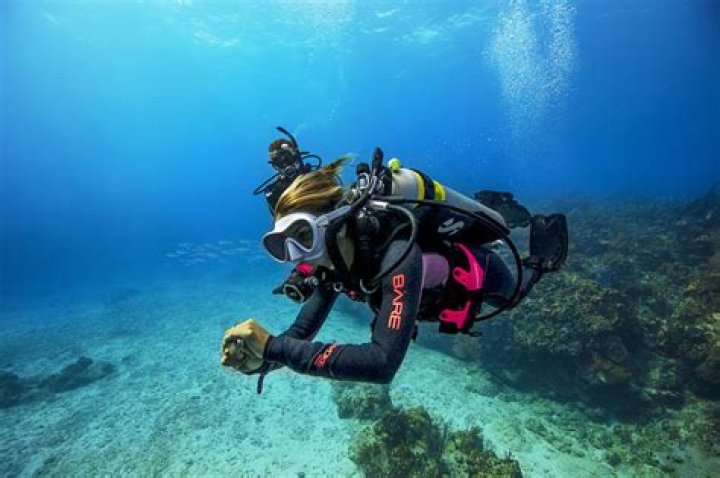
SCUBA stands for Self-Contained Underwater Breathing Apparatus. This technical name describes equipment that allows divers to breathe underwater without being connected to the surface by air hoses. The acronym emerged during World War II when military engineers needed a shorthand way to reference revolutionary diving technology. What started as military jargon eventually became the universal term for recreational and professional diving equipment used by millions worldwide.
The Birth of an Acronym
The term SCUBA was coined by Major Christian J. Lambertsen, a physician in the United States Army Medical Corps, in 1952. Lambertsen developed early rebreather technology for military combat swimmers who needed to operate underwater without creating telltale air bubbles on the surface. His work built upon decades of diving innovation, but he gave the equipment category its memorable name.
Before SCUBA became standard terminology, divers used various descriptions for their gear. "Aqualung" was popular, particularly after Jacques Cousteau and Émile Gagnan developed their open-circuit demand regulator in 1943. British divers sometimes called their equipment "free diving apparatus," while others simply referred to "diving lungs" or "underwater breathing sets." The military's adoption of SCUBA as official nomenclature helped standardize the language around this emerging technology.
Interestingly, the acronym initially appeared in all capitals—SCUBA—reflecting its technical origins. Over time, as the term entered everyday language, it transformed into a regular word: "scuba." This linguistic evolution mirrors what happened to other acronyms like "scuba's" predecessor technologies. Today, most dictionaries accept both forms, though "scuba" in lowercase has become standard in casual usage.
Breaking Down the Meaning
Each component of the SCUBA acronym tells part of the story about what makes this technology revolutionary:
- Self-Contained: The diver carries everything needed to breathe underwater. No surface connection required. No umbilical cord pumping air from above. Complete independence.
- Underwater: Specifically designed for submerged operation, distinguishing it from surface-supplied diving or snorkeling equipment.
- Breathing: The primary function—delivering breathable air or gas mixtures to the diver's lungs.
- Apparatus: A technical term for the complete system of tanks, regulators, hoses, and valves working together.
This self-contained nature represented a quantum leap in diving capability. Earlier diving systems used heavy suits connected to surface air pumps through long hoses. Divers could only go as deep and as far as their air lines permitted. SCUBA equipment freed divers from the surface entirely, opening vast new possibilities for exploration, research, military operations, and recreation.
How SCUBA Technology Works
Understanding what SCUBA means becomes clearer when you examine how the apparatus functions. The basic system consists of compressed air stored in high-pressure cylinders strapped to the diver's back. A regulator reduces this high-pressure air to ambient pressure—matching the surrounding water pressure at any depth—making it breathable.
The regulator operates on demand, delivering air only when the diver inhales. Exhaled breath escapes into the water as bubbles. This open-circuit design, pioneered by Cousteau and Gagnan, became the dominant SCUBA configuration because of its simplicity and reliability. Modern recreational divers typically use this same basic principle, though with significant technological refinements.
More advanced SCUBA systems include rebreathers, which recycle exhaled breath by removing carbon dioxide and adding fresh oxygen. These closed-circuit systems produce no bubbles, extend underwater time, and allow deeper diving with specialized gas mixtures. Military divers, cave explorers, and technical divers often prefer rebreathers despite their complexity and cost.
From Military Tool to Global Recreation
SCUBA diving remained primarily military and scientific for its first decade. Navy frogmen used the technology for underwater demolition, reconnaissance, and salvage operations. Marine biologists gained unprecedented access to study ocean life in natural habitats. But the recreational diving industry barely existed.
That changed dramatically in the 1960s and 1970s. Diving certifications became available to civilians. Equipment manufacturers started producing consumer-grade SCUBA gear. Coastal resorts began offering dive trips. Jacques Cousteau's television specials sparked public imagination about underwater exploration. What was once exotic military technology became an accessible sport for adventurous travelers.
Today, the recreational diving industry generates billions annually. Certification organizations like PADI and SSI have trained tens of millions of divers worldwide. Popular diving destinations from the Great Barrier Reef to the Caribbean reefs depend economically on SCUBA tourism. The word "scuba" appears in hundreds of thousands of business names, from dive shops to boat charters to underwater photography services.
SCUBA in Professional Fields
Beyond recreation, SCUBA remains essential for numerous professional applications. Marine biologists use it for coral reef monitoring, fish population surveys, and underwater ecosystem research. Archaeologists employ SCUBA to excavate shipwrecks and submerged ancient sites. Commercial divers inspect underwater infrastructure, repair ships, maintain offshore platforms, and construct marine facilities.
Public safety divers—police, fire departments, and search-and-rescue teams—rely on SCUBA for underwater recovery operations and evidence collection. Scientific divers conduct climate research, study underwater geology, and collect specimens from aquatic environments. Underwater photographers and filmmakers use SCUBA equipment to capture stunning imagery for documentaries, films, and conservation campaigns.
Each professional application pushes SCUBA technology in different directions. Scientific divers need equipment that allows precise buoyancy control for delicate research tasks. Commercial divers require robust gear that can withstand harsh working conditions and contaminated water. Military divers demand equipment with minimal acoustic and visual signature. This diversity drives continuous innovation in SCUBA design and capabilities.
Common Misconceptions About SCUBA
Many people confuse SCUBA diving with other forms of underwater activity. Snorkeling, for instance, involves swimming at the surface with a breathing tube—no self-contained apparatus involved. Surface-supplied diving uses air pumped from above through hoses, meaning it doesn't meet the "self-contained" criterion. Free diving relies on breath-holding without any breathing apparatus at all.
Another misconception involves what divers breathe. Most recreational SCUBA uses regular compressed air—roughly 21% oxygen and 79% nitrogen, the same mixture we breathe on land. Some technical divers use enriched air (higher oxygen percentages) or exotic gas blends for specific depth ranges, but standard air remains most common. Despite popular belief, divers don't breathe pure oxygen, which becomes toxic under pressure.
People sometimes assume SCUBA diving is inherently dangerous. While underwater environments demand respect and proper training, recreational diving has an excellent safety record when divers follow established protocols. Major risks come from panic, poor judgment, or ignoring training—not from the equipment itself. Millions dive safely every year using SCUBA gear that has become increasingly reliable through decades of engineering refinement.
The Evolution of SCUBA Equipment
Early SCUBA gear was heavy, cumbersome, and uncomfortable. Regulators breathed wet, meaning water entered the mouthpiece. Buoyancy control was primitive. Depth and air supply monitoring required constant vigilance. Divers endured significant physical discomfort for the privilege of breathing underwater.
Modern SCUBA equipment bears little resemblance to those early systems. Lightweight materials replaced heavy metals. Balanced regulators breathe effortlessly at any depth. Integrated buoyancy control devices allow precise positioning in the water column. Digital computers monitor depth, time, and air consumption while calculating safe ascent profiles. Wetsuits and drysuits provide thermal protection in waters that would have been unbearable for early divers.
Current innovation focuses on connectivity and data integration. Dive computers transmit information to wrist displays wirelessly. Some systems upload dive logs automatically to cloud services. Heads-up displays project information inside dive masks. GPS-enabled surface markers help boats locate divers. What started as purely mechanical apparatus has evolved into a sophisticated electronic system.
Cultural Impact of the SCUBA Acronym
The word "scuba" has permeated popular culture far beyond diving circles. It appears in film titles, song lyrics, and brand names having nothing to do with underwater activity. The term evokes adventure, exploration, and escape from ordinary life. Companies leverage these associations even when their products have no connection to diving.
Language enthusiasts note how smoothly SCUBA transitioned from technical acronym to everyday word. Unlike clunky initialisms that remain spelled out letter-by-letter, SCUBA became pronounceable and memorable. This linguistic success contributed to diving's popularization—the activity had a catchy, accessible name that captured public imagination.
The acronym also appears in countless variations and playful reinterpretations. Dive instructors joke about alternative meanings. Marketing departments create pseudo-acronyms following SCUBA's pattern. The format proved so successful that other industries have tried replicating it with varying success, though few acronyms achieve the same cultural penetration.
Frequently Asked Questions
Who invented SCUBA diving?
No single person invented SCUBA diving. Jacques Cousteau and Émile Gagnan developed the first successful open-circuit demand regulator (the Aqua-Lung) in 1943, which became the foundation for modern recreational diving. Christian Lambertsen coined the term "SCUBA" in 1952 while developing military rebreather systems. Earlier inventors, including Benoît Rouquayrol and Auguste Denayrouze in the 1860s, created proto-SCUBA devices, but Cousteau's design made diving practical and accessible.
Is SCUBA always written in capital letters?
Originally yes, because SCUBA functioned as a true acronym in technical and military contexts. As the term entered mainstream vocabulary, lowercase "scuba" became standard in casual writing, similar to how "radar" and "laser" evolved. Style guides vary—some publications maintain capitals, others use lowercase. Both forms are considered correct, though lowercase now dominates in recreational diving literature and popular media.
What's the difference between SCUBA and snorkeling?
Snorkeling involves swimming at or near the surface using a breathing tube (snorkel) that extends above water. Snorkelers cannot dive deep or stay submerged for extended periods. SCUBA divers carry their air supply in tanks, allowing them to stay underwater for extended periods (typically 30-60 minutes) and reach significant depths (recreational limits typically 130 feet). SCUBA requires certification and specialized training, while snorkeling needs only basic swimming ability and comfort in water.
The Enduring Legacy
Understanding what SCUBA means connects us to a larger story about human innovation and curiosity. We're terrestrial creatures who evolved to breathe air, yet we've engineered solutions allowing us to explore an alien environment covering 71% of our planet's surface. The Self-Contained Underwater Breathing Apparatus represents more than clever engineering—it symbolizes our drive to push beyond natural limitations.
From military origins to global recreation, from technical acronym to household word, SCUBA has transformed how humans interact with oceans, lakes, and rivers. Marine conservation efforts depend on scientists using SCUBA to study threatened ecosystems firsthand. Archaeological discoveries emerged from SCUBA-equipped researchers exploring underwater ruins. Millions of people gained life-changing experiences breathing underwater, seeing coral reefs and marine life up close.
Next time you hear someone mention "scuba diving," you'll know the term carries decades of history and innovation in those five letters. What started as military shorthand became the key that unlocked Earth's last great frontier for ordinary people seeking extraordinary experiences beneath the waves.
