Speaking Gibberish to English Speakers: Why People Do It and What It Means
 Rachel Newton
 Speaking gibberish to English speakers might seem like childish nonsense, but this peculiar form of communication reveals fascinating insights about language, human psychology, and social interaction. From toddlers experimenting with sounds to adults using made-up words for humor or bonding, gibberish serves purposes far beyond mere randomness. People engage in this behavior across cultures and age groups, often without realizing the complex cognitive processes at work.
The act of producing nonsensical sounds that mimic real language patterns has captivated linguists, psychologists, and educators for decades. Whether it's a parent responding to their baby's babbling, friends creating inside jokes with invented words, or performers entertaining audiences through linguistic absurdity, gibberish occupies a unique space between meaningful communication and pure noise. Understanding why humans gravitate toward this behavior opens a window into how we process language, build relationships, and express creativity.
What Exactly Is Gibberish
Gibberish refers to speech or writing that sounds like language but carries no actual meaning. It mimics the rhythm, intonation, and phonetic patterns of real words without forming coherent thoughts. Unlike foreign languages that speakers simply don't understand, gibberish intentionally lacks semantic content while maintaining linguistic structure.
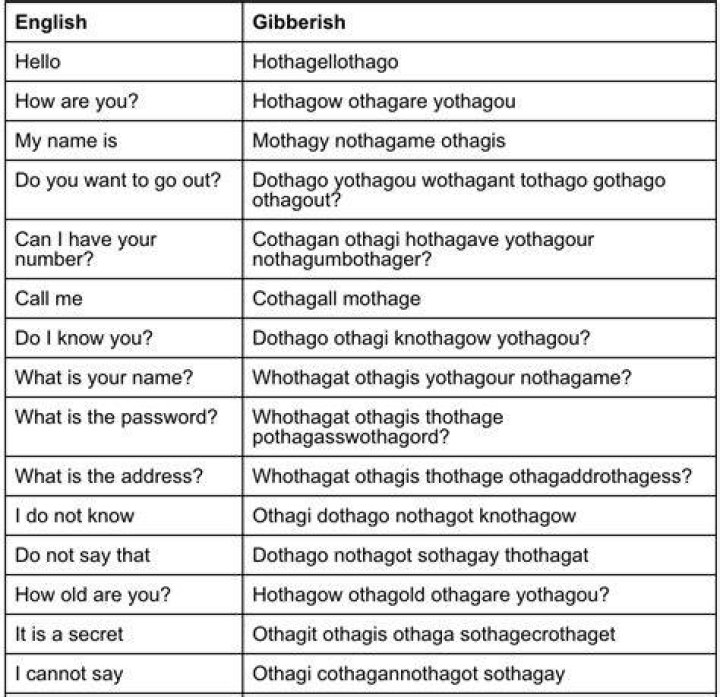
The term encompasses several distinct forms. Some people produce random syllables without any pattern. Others create sophisticated pseudo-languages that follow consistent rules, like Pig Latin or Double Dutch. Professional performers develop gibberish that sounds remarkably like specific languages—think of comedians imitating French or Italian without saying actual words.
Children naturally produce gibberish during language development, typically between 6 and 18 months. They string together consonant-vowel combinations that sound conversational but mean nothing. This "jargon babbling" represents a crucial developmental stage where infants practice the mechanics of speech before mastering vocabulary.
Why People Speak Gibberish to English Speakers
The motivations behind speaking gibberish vary dramatically based on context and relationship dynamics. Parents often respond to their babies in gibberish, instinctively matching their child's communication level. This mirroring behavior strengthens emotional bonds and encourages continued vocal experimentation. Research shows that babies whose caregivers engage with their babbling develop language skills faster than those who don't receive responsive feedback.
Humor drives much adult gibberish. Comedians have long used nonsense speech to parody foreign languages or create absurdist humor. Friends might invent silly words or phrases that become part of their private lexicon. These linguistic inside jokes reinforce group identity and create shared experiences that outsiders can't fully access.
Some individuals use gibberish defensively when they don't want to engage in genuine conversation. A teenager might respond to parental questions with exaggerated nonsense sounds to express frustration or avoid answering. Similarly, people sometimes resort to gibberish when overwhelmed, stressed, or simply not wanting to articulate complex thoughts.
Linguistic experimentation represents another common motivation. Language learners might test pronunciation patterns by creating nonsense sentences that follow target-language phonetics. Writers and artists use gibberish to explore sound divorced from meaning, treating language as pure acoustic material rather than a vehicle for content.
The Psychology Behind Nonsensical Communication
Speaking gibberish activates many of the same neural pathways as regular speech. Brain imaging studies reveal that producing meaningless but structured vocalizations engages Broca's area and other language centers. This suggests that the motor patterns of speech matter as much as semantic content for how our brains process communication.
Gibberish can serve as emotional release. When words fail to capture feelings, some people abandon coherent language entirely. The freedom from meaning allows pure expression of frustration, joy, or confusion without the constraints of vocabulary. Young children demonstrate this clearly when they jabber excitedly about something they lack words to describe.
Social bonding through shared nonsense has evolutionary roots. Primates engage in vocal play that strengthens group cohesion without conveying specific information. Human gibberish might fulfill similar functions, creating intimacy through coordinated but meaningless sound-making. Couples often develop private gibberish words or silly voices that wouldn't make sense to outsiders but carry significant emotional weight within the relationship.
The cognitive ease of gibberish matters too. Producing meaningful speech requires selecting appropriate words, constructing grammar, and monitoring for clarity. Gibberish eliminates these demands. People under cognitive load—multitasking, exhausted, or intoxicated—sometimes slip into nonsense speech because their brains can't handle full linguistic processing.
Gibberish in Professional and Educational Settings
Educators use gibberish strategically to teach phonemic awareness and reading skills. When children hear adults speak nonsense words that follow English phonetic rules, they learn to decode sounds independent of meaning. This skill transfers to reading unfamiliar real words later.
Speech therapists employ gibberish exercises to help clients with articulation disorders. Practicing nonsense syllables removes the pressure of producing known words correctly, letting patients focus purely on mouth movements and sound production. Once motor patterns improve, therapists transition to meaningful vocabulary.
Performers in improvisational theater often use gibberish to create characters speaking imaginary languages. This technique forces them to communicate through body language, tone, and context rather than relying on words. Audiences find these gibberish scenes surprisingly comprehensible because humans excel at reading nonverbal cues.
Some language teachers introduce lessons by speaking extended gibberish that mimics the target language's sound patterns. Students quickly realize they can't understand through passive listening alone, which motivates active learning strategies. This approach dramatically illustrates the difference between familiar and unfamiliar linguistic systems.
Cultural Variations and Gibberish Traditions
Different cultures have distinct gibberish traditions. English speakers created Pig Latin, which moves initial consonants to word endings and adds "ay." Spanish speakers have Jerigonza, which inserts syllables into words. These playful language games teach children about phonological manipulation while providing coded communication among peers.
Some musical traditions incorporate gibberish purposefully. Scat singing in jazz uses nonsense syllables to create vocal improvisation. Doo-wop groups of the 1950s famously used meaningless sounds as rhythmic and melodic elements. These practices demonstrate how gibberish can carry emotional and aesthetic value without semantic content.
Religious and spiritual contexts sometimes feature glossolalia, or "speaking in tongues," where practitioners produce streams of syllables they believe represent divine language. While controversial and complex, this phenomenon shows how gibberish can hold profound meaning for speakers even when incomprehensible to listeners.
Benefits of Engaging With Gibberish
Responding to children's gibberish appropriately supports language development. When adults treat nonsense babbling as legitimate communication—making eye contact, taking turns, and responding with interest—babies learn conversational structure before mastering words. This scaffolding proves essential for later linguistic competence.
Creative professionals report that gibberish exercises unlock new thinking patterns. Writers use nonsense writing to bypass their internal editors. Musicians improvise with nonsense lyrics to find melodies without getting stuck on lyric content. This separation of form from meaning can lead to unexpected creative breakthroughs.
Gibberish games build phonological awareness in children, which predicts reading success. Kids who play with sound patterns—creating rhymes, alliterations, and nonsense words—develop stronger decoding skills than those who don't engage in such linguistic play. The ability to manipulate sounds consciously translates directly to literacy.
For second language learners, producing gibberish in the target language's phonetic patterns builds confidence. Students can practice pronunciation, rhythm, and intonation without worrying about grammar or vocabulary errors. This reduces speaking anxiety and makes later attempts at meaningful communication less stressful.
When Gibberish Becomes Problematic
Persistent gibberish in children beyond age three might signal language delays requiring professional evaluation. While normal toddlers mix real words with jargon, school-age children should communicate primarily through conventional language. Extended reliance on nonsense speech could indicate hearing problems, developmental disorders, or insufficient language exposure.
Adults who suddenly start speaking frequent gibberish might be experiencing neurological issues. Certain types of aphasia cause fluent but meaningless speech that patients don't recognize as nonsensical. Stroke, dementia, or other brain injuries can disrupt language centers while leaving speech production intact, resulting in gibberish that sounds confident but communicates nothing.
Using gibberish to dismiss or mock others crosses into disrespectful territory. Imitating someone's accent through exaggerated nonsense sounds constitutes mockery rather than playful communication. Similarly, responding to serious questions with deliberate gibberish can be a form of conversational aggression or dismissiveness.
Frequently Asked Questions
Why do babies speak gibberish before real words?
Babies produce gibberish as they learn to control their vocal apparatus and experiment with sounds. This jargon babbling lets them practice the motor patterns of speech—tongue placement, breath control, pitch variation—before they understand that specific sound combinations carry meaning. It's essentially vocal practice that prepares them for language production. Babies who babble more extensively typically develop vocabulary faster because they've thoroughly rehearsed the physical aspects of speaking.
Is speaking gibberish to your pet normal?
Absolutely normal and extremely common. People use gibberish, baby talk, and nonsense words with pets for several reasons. It creates an affectionate, playful tone that both owner and animal find enjoyable. Since pets don't understand most human language anyway, the pressure to speak meaningfully disappears, freeing owners to make silly sounds. This verbal play strengthens the human-animal bond and provides stress relief for owners. The high-pitched, simplified speech patterns people naturally adopt with pets mirror how adults speak to babies.
Can you actually learn anything from speaking gibberish?
Yes, particularly about language structure and sound patterns. Creating gibberish that mimics a real language requires understanding its phonetic rules, rhythm, and prosody. This metalinguistic awareness—thinking consciously about language rather than just using it—enhances overall communication skills. Actors who develop convincing gibberish become better at vocal control and expression. Children who play gibberish games develop stronger phonological processing, which correlates with reading ability. Even adults can improve pronunciation in foreign languages by practicing with nonsense syllables that isolate challenging sound combinations.
The Social Dimensions of Nonsense Speech
Gibberish functions as a social tool more often than people realize. Romantic partners develop private languages filled with nonsense words that carry specific meanings within their relationship. These invented terms create intimacy by establishing communication patterns unique to the couple. Outsiders hearing these exchanges might think the speakers are being silly, but for the participants, each nonsense word holds genuine emotional significance.
Friend groups, especially during adolescence, create gibberish phrases that serve as identity markers. Using specific nonsense terms signals membership in the group and reinforces social boundaries. This linguistic play helps young people establish independence from parents while building peer connections. The seemingly pointless words actually perform crucial social functions.
Workplace cultures sometimes develop jargon that sounds like gibberish to outsiders. While not technically meaningless, highly specialized vocabulary can function similarly to gibberish in creating in-group solidarity and marking expertise. The line between technical language and gibberish depends largely on the listener's knowledge base.
Final Thoughts
Speaking gibberish to English speakers is far from meaningless behavior. This linguistic phenomenon reveals how humans learn language, build relationships, express creativity, and navigate social hierarchies. From developmental stages in infancy to adult humor and artistic expression, gibberish occupies an important space in human communication. The next time you hear someone producing nonsense sounds, consider what functions that gibberish might serve. Chances are there's more going on beneath the surface than random noise. Language exists on a spectrum, and gibberish sits at a fascinating intersection where form meets play, where sound matters more than sense, and where communication happens even without conventional meaning.
