How Did Lamine Yamal Get So Good at Dribbling? The Untold Story
 James Olson
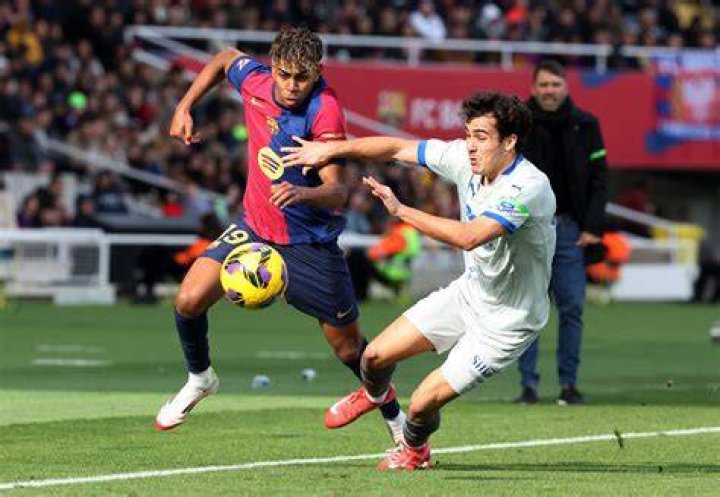
Lamine Yamal's feet move with a fluidity that defies his age. At 17, the Barcelona winger glides past defenders like they're training cones, executing body feints and close control that players twice his age struggle to master. His dribbling isn't just good—it's genuinely special, the kind that makes veteran commentators pause mid-sentence. But natural talent alone doesn't explain how a teenager becomes one of Europe's most exciting ball carriers.
The answer lies in a combination of factors that began long before he made his professional debut. From the structured brilliance of Barcelona's youth academy to informal street sessions in Mataró, Yamal's path to elite dribbling represents both modern football science and old-school passion. Understanding how he developed this skill reveals lessons about player development that challenge conventional wisdom.
The La Masia Foundation: Where Technical Excellence Becomes Routine
Barcelona's famed youth academy didn't just polish Yamal's raw ability—it shaped his entire relationship with the ball. La Masia operates on principles established during Johan Cruyff's era, emphasizing tight spaces, quick decision-making, and treating the ball like an extension of your body. Yamal joined the system at age seven, which meant thousands of hours in rondos before most kids master basic passing.
The academy's training methodology focuses heavily on positional play and maintaining possession under pressure. Young players spend countless sessions in congested areas where they must receive, turn, and advance the ball within seconds. This environment forces rapid technical development. You either learn to shield the ball with your body while scanning for space, or you don't progress. Yamal clearly thrived.
What separates La Masia from other academies is the emphasis on game intelligence alongside technical skill. Coaches don't just drill dribbling patterns—they teach when to take players on versus when to pass. Yamal absorbed these lessons at a formative age, developing decision-making instincts that make his dribbling purposeful rather than flashy. He attacks space, not just defenders.
Street Football: The Unstructured Genius Behind His Creativity
Before La Masia refined his technique, Yamal was just another kid playing pickup games in Rocafonda, a working-class neighborhood in Mataró. These informal sessions on concrete pitches and small courts contributed something no academy can fully replicate: creative freedom and fearlessness.
Street football rewards risk-taking. There's no coach yelling about defensive shape when you lose the ball attempting a nutmeg. This environment encourages players to experiment with moves they'd never try in structured training. Yamal has mentioned in interviews how these early games taught him to play without fear, to attempt the unexpected. That audacity still shows when he casually flicks the ball through a defender's legs in Champions League matches.
The smaller playing areas in street football also demand exceptional close control. When space is tight and older, bigger kids are trying to dispossess you, you learn body feints and quick changes of direction instinctively. Yamal's ability to shift the ball from one foot to another in minimal space—one of his signature moves—likely has roots in these cramped neighborhood games where losing possession meant waiting on the sidelines.
Physical Attributes That Amplify Technical Ability
Yamal's dribbling prowess isn't purely technical—his physical characteristics play a significant role. His low center of gravity provides exceptional balance, making him incredibly difficult to knock off the ball. Defenders often attempt shoulder-to-shoulder challenges only to watch him stay upright while they stumble.
His acceleration over short distances is remarkable. Yamal doesn't need a 40-yard sprint to beat his marker. Three explosive steps after a sudden direction change usually suffice. This burst speed, combined with his ball manipulation, creates separation that seems almost effortless. Defenders know what's coming but can't react quickly enough.
Body shape and positioning matter enormously in modern dribbling. Yamal consistently uses his body to shield the ball while maintaining forward momentum—a skill that requires both strength and spatial awareness. Watch him receive passes with his back to goal: he's already positioning his body to protect possession while scanning for his next move. This isn't accidental; it's trained behavior reinforced by years in Barcelona's system.
The Role of Early Competitive Exposure
Making his Barcelona first-team debut at 15 accelerated Yamal's development in ways youth football couldn't. Facing professional defenders week after week forced rapid adaptation. The physical intensity, tactical sophistication, and mental pressure of top-level football provide learning opportunities that academy matches simply cannot replicate.
This early exposure taught him which moves work against elite opposition and which ones get you dispossessed. His dribbling became more efficient, more calculated. He learned to pick his moments, understanding when to take on his defender and when to play a simple pass. That maturity in decision-making, unusual for someone his age, stems from competing against grown men who exploit any hesitation.
Playing alongside world-class teammates also elevated his game. Training daily with experienced professionals showed him how elite players prepare, how they analyze opponents, and how they maintain consistency. Yamal could observe Robert Lewandowski's positioning, Pedri's ball manipulation, and Raphinha's movement patterns up close. That educational environment is priceless for a developing talent.
Key Elements That Define Yamal's Dribbling Style
Several specific attributes make Yamal's dribbling distinctive and effective at the highest level:
- Ball manipulation speed: His first touch consistently sets up his next move, eliminating wasted motion that gives defenders recovery time.
- Change of pace: Yamal frequently slows down before exploding forward, disrupting defensive timing and creating space.
- Body feints: He sells direction changes with his shoulders and hips, not just his feet, making his movements more deceptive.
- Two-footedness: Comfortable dribbling with either foot, preventing defenders from forcing him onto a weaker side.
- Spatial awareness: He processes nearby defenders, teammates, and available space simultaneously while controlling the ball.
- Low risk in dangerous areas: Despite his flair, Yamal rarely attempts high-risk dribbles near his own penalty area, showing tactical maturity.
Tactical Intelligence: The Hidden Component
Great dribbling isn't just about beating your marker—it's about understanding game situations. Yamal recognizes when his team needs him to draw fouls to relieve pressure, when to drive forward to exploit space, and when his opponent's positioning creates numerical advantages elsewhere if he commits defenders.
His decision-making reflects hours of video analysis and tactical coaching. Barcelona's staff emphasizes reading defensive structures, identifying when center-backs are isolated, and recognizing moments when fullbacks are caught between pressing and covering. Yamal processes this information while controlling the ball at speed, which explains why his dribbling often creates dangerous situations rather than just looking impressive.
Positional discipline enhances his dribbling effectiveness. By maintaining width and staying high up the pitch, he receives the ball in areas where successful dribbles immediately threaten the opposition goal. This tactical understanding transforms his technical ability into genuine goal threat, distinguishing him from skillful players who dribble in less dangerous zones.
The Mental Side: Confidence and Composure
Technical ability means little without the mental strength to use it under pressure. Yamal's confidence appears unshakeable. He attempts ambitious dribbles in crucial matches without visible hesitation, a trait that suggests strong psychological preparation and self-belief cultivated over years.
Handling the pressure that comes with Barcelona's expectations requires exceptional mental resilience. The club has a complicated history with young talents—some flourish, others crumble under scrutiny. Yamal's ability to perform consistently in high-pressure situations indicates mental conditioning that extends beyond technical training.
His composure when receiving the ball in tight spaces comes from repetition and trust in his preparation. Players who panic when pressed make poor decisions; Yamal typically stays calm, using his first touch to create separation while processing his options. This mental clarity in chaotic moments separates good dribblers from exceptional ones.
Frequently Asked Questions
At what age did Lamine Yamal start showing exceptional dribbling ability?
Yamal demonstrated advanced ball control by age seven when he joined La Masia. Youth coaches noted his exceptional touch and confidence on the ball from his earliest sessions. However, his dribbling became truly elite during his early teenage years as physical development combined with technical refinement. By 14, he was already outperforming older academy players in one-on-one situations.
What specific training methods helped develop his dribbling skills?
Barcelona's rondo exercises—possession games in tight circles—forced Yamal to develop quick feet and spatial awareness. Additionally, one-on-one drills against defenders, cone-weaving exercises for close control, and small-sided games in restricted spaces all contributed. La Masia also emphasizes receiving on the half-turn, which allows attackers to face forward immediately and identify dribbling opportunities. The combination of structured technical drills and game-realistic scenarios created comprehensive skill development.
Can recreational players learn from Yamal's dribbling development path?
While few have access to Barcelona's resources, several principles from Yamal's development apply broadly. Playing in small-sided games improves decision-making and close control. Practicing with both feet prevents predictability. Regular one-on-one challenges against slightly better opponents accelerates improvement. Most importantly, thousands of hours touching the ball—whether in structured training or informal play—remains irreplaceable for developing elite ball manipulation. Consistency and purposeful practice matter more than any single training method.
How does Yamal's dribbling compare to other young talents?
Among players his age, Yamal's combination of success rate, decision-making, and end product is exceptional. While other young dribblers might complete more attempts, Yamal's efficiency—dribbling in dangerous areas that create scoring chances—sets him apart. His 1v1 success rate in La Liga exceeds most wingers regardless of age. What makes him special isn't just beating defenders but doing so in ways that directly threaten goal, whether through assists, shots, or drawing multiple defenders to create space for teammates.
Final Thoughts
Lamine Yamal's dribbling excellence emerged from a perfect convergence of factors that began in childhood and continues developing today. La Masia provided world-class technical training and tactical education. Street football in Mataró fostered creativity and fearlessness. His physical attributes—balance, acceleration, body control—amplified his technical foundation. Early first-team exposure accelerated his maturity against elite opposition.
But perhaps most important was the sheer volume of meaningful touches on the ball throughout his development. Whether in academy drills, neighborhood games, or Champions League matches, Yamal has spent his formative years solving the puzzle of how to beat defenders in increasingly difficult contexts. That accumulated experience, combined with natural talent and elite coaching, explains how a 17-year-old moves like he's been doing this for decades.
His story offers insights for anyone interested in skill development. World-class ability rarely comes from a single source—it's built through multiple environments that each contribute unique elements. The structured and the spontaneous, the physical and the mental, the technical and the tactical: all these dimensions interact to create genuinely special players. Yamal represents what's possible when talent meets optimal development conditions. And given his age, his dribbling will likely get even better.
