Could Muggsy Bogues Dunk? The Truth About the NBA's Shortest Player
 Emily Schmidt
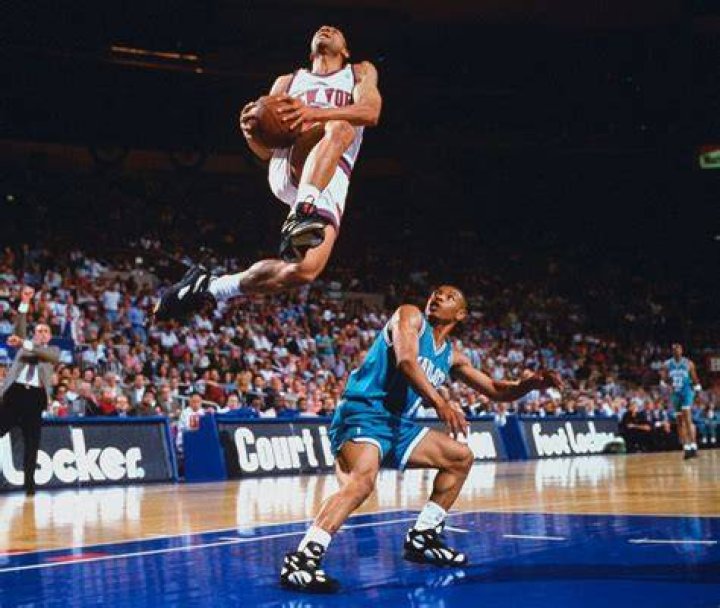
 Tyrone "Muggsy" Bogues stood just 5 feet 3 inches tall, making him the shortest player in NBA history. For 14 seasons, he defied expectations on basketball's biggest stage, carving out a respectable career that left fans with one burning question: could this diminutive point guard actually dunk a basketball?
The question has sparked debate for decades. Some claim they witnessed it during pickup games. Others insist the physics simply don't add up. Bogues himself has given conflicting answers over the years, adding fuel to one of basketball's most enduring mysteries. What's undeniable is that his 44-inch vertical leap was exceptional, but was it enough?
The Physical Reality of Dunking at 5'3"
A regulation NBA rim sits 10 feet above the floor. For Muggsy Bogues to dunk, his hand would need to reach approximately 10 feet 6 inches when accounting for the ball's diameter and the downward force required. Standing reach matters tremendously here.
Most players around 5'3" have a standing reach between 6'6" and 6'8". If Bogues had a standing reach of 6'7" and achieved his reported 44-inch vertical leap, his maximum reach would hit roughly 10'3". That's close, but dunking requires more than simply touching the rim. You need enough clearance to push the ball through forcefully.
The math presents a challenge. Even with an elite vertical leap, Bogues would have operated in a razor-thin margin. A 48-inch vertical would have made it feasible. Anything less makes it extraordinarily difficult, if not impossible, during actual game conditions.
What Muggsy Bogues Has Said
Bogues has addressed the dunking question multiple times throughout his career and retirement, though his answers haven't always aligned perfectly. In several interviews, he's stated he could dunk during his college days at Wake Forest when he was "young and fresh." He's mentioned doing it during practice sessions and warmups, away from the scrutiny of official games.
However, he's also acknowledged that in-game dunking was a different story entirely. The physicality of NBA play, combined with defensive pressure and the split-second decision-making required, made attempting a dunk impractical and potentially dangerous. Getting blocked by a 7-footer isn't just embarrassing—it could mean injury.
In a 2020 interview, Bogues clarified: "I never dunked in a game. Could I dunk? In college, yeah, I could get it done. But in the NBA? That's a whole different animal." This distinction matters. Dunking in an empty gym differs vastly from dunking in Madison Square Garden with Patrick Ewing contesting.
Eyewitness Accounts and Teammate Testimonies
Several former teammates and coaches have weighed in over the years. Some recall seeing Bogues dunk during practice or shootarounds. Dell Curry, who played alongside Bogues in Charlotte, mentioned in interviews that Muggsy could "get up there" and had the hops to theoretically finish a dunk under perfect conditions.
Yet no verified video footage exists. In an era before smartphones and social media, practice sessions weren't documented the way they are today. If Bogues dunked during the late 1980s or early 1990s, it likely happened without cameras present. That absence of proof has kept skeptics skeptical.
Former NBA player and coach Sam Vincent played with Bogues and suggested that while Muggsy had incredible leaping ability, the full-extension dunk remained just beyond his capabilities. "He could grab rim easily," Vincent noted, "but throwing it down with authority? That's another level."
Comparing to Other Shorter Players Who Could Dunk
Muggsy Bogues wasn't the only short player to make basketball fans question the limits of human athleticism. Spud Webb, standing 5'6", famously won the 1986 NBA Slam Dunk Contest with spectacular dunks that left audiences speechless. Webb possessed a reported 46-inch vertical leap, giving him slightly more lift than Bogues.
Those three inches of height difference matter exponentially. Webb's standing reach was proportionally higher, and his vertical gave him the extra clearance needed to dunk comfortably and creatively. He proved that shorter players could absolutely throw down, but he also highlighted how critical every inch becomes.
Nate Robinson, at 5'9", won the Slam Dunk Contest three times. His combination of height and a 43.5-inch vertical made him a dunking machine despite his size. Calvin Murphy, Earl Boykins, and Isaiah Thomas (the current era one) have all navigated NBA careers under 6 feet, but none were as short as Bogues.
The Physics Behind Vertical Leap and Dunking
Vertical leap measurement can be deceptive. A 44-inch vertical means jumping 44 inches higher than your standing reach—impressive by any measure. But translating that into a dunk requires perfect timing, hand size adequate to palm the ball, and body control in midair.
Hand size posed another challenge for Bogues. Smaller hands make palming a basketball difficult, which means he'd need to dunk off a gather or cradle rather than a one-handed flush. That technique requires even more vertical clearance and control. Players who can palm the ball have mechanical advantages that shorter players with smaller hands simply don't.
Explosiveness matters too. A vertical leap measures maximum jumping ability under ideal conditions—fresh legs, perfect approach, optimal timing. Game situations rarely provide those luxuries. Fatigue, defensive pressure, and the need to maintain ball control while airborne all diminish effective jumping height.
Why In-Game Dunking Would Have Been Impractical
Even if Bogues possessed the physical ability to dunk in perfect conditions, attempting one during an NBA game would have been strategically questionable. At 5'3", approaching the rim for a dunk meant navigating a forest of players 6'8" to 7'2". The risk of getting blocked, stripped, or injured would have outweighed any potential reward.
Bogues built his career on speed, court vision, and defensive tenacity. He averaged 7.6 assists per game over his career, orchestrating offenses and creating opportunities for teammates. His value came from what he did with the ball in his hands, not from aerial theatrics. A missed dunk attempt could have resulted in an easy fast-break opportunity for opponents.
The basketball IQ required to succeed at his size meant picking battles wisely. Layups, floaters, and pocket passes were higher-percentage plays. Dunking would have been flash without function, and Bogues understood that survival in the NBA demanded substance.
Cultural Impact and the Legend's Growth
The question of whether Muggsy Bogues could dunk has transcended basketball, becoming a symbol of human potential and defying limitations. His career represented something larger than statistics—it embodied the idea that heart and skill can overcome physical disadvantages.
Internet forums, sports bars, and playgrounds have debated this topic for years. The lack of definitive proof has allowed the legend to grow organically. Some embellish the story, claiming they saw him windmill dunk in a pickup game in Baltimore. Others remain firmly skeptical, citing physics and probability.
This ambiguity has arguably benefited Bogues' legacy. The mystery keeps his name relevant decades after retirement. Younger fans discover his story and immediately ask the dunking question, creating an evergreen conversation that newer players rarely generate.
Modern Training and What Today's Athletes Achieve
Contemporary training methods have pushed vertical leap capabilities to new heights. Plyometrics, resistance training, and biomechanical analysis have created athletes who jump higher and more explosively than previous generations. If Bogues had access to modern sports science, could his vertical have increased to 48 or 50 inches?
Possibly. Athletes today benefit from nutrition science, recovery protocols, and strength training sophistication that didn't exist in the 1980s and 1990s. However, genetics still impose hard limits. Some people are simply built to jump higher than others, regardless of training intensity.
Current players like Ja Morant and Russell Westbrook, both around 6'3", throw down spectacular dunks with 40-inch verticals. Their additional height makes a massive difference. The gap between 5'3" and 6'3" cannot be overstated when discussing dunking ability.
Frequently Asked Questions
Did Muggsy Bogues ever dunk in an official NBA game?
No verified evidence exists of Muggsy Bogues dunking during an official NBA game. He has stated in interviews that he chose not to attempt dunks during games due to the impracticality and risk involved, though he claims he could dunk under certain conditions during his college years and in practice settings.
How high could Muggsy Bogues jump?
Muggsy Bogues reportedly had a vertical leap of 44 inches, which is exceptional by any standard. This vertical leap, combined with his 5'3" frame and estimated standing reach of around 6'7", would have given him a maximum reach of approximately 10'3"—just short of what's typically needed to comfortably dunk a basketball on a 10-foot rim.
Who is the shortest player to ever dunk in an NBA game?
Spud Webb, standing 5'6", is widely recognized as the shortest player to dunk in NBA games. He famously won the 1986 NBA Slam Dunk Contest, proving that players under 5'7" could achieve dunking with exceptional vertical leap ability. His three-inch height advantage over Bogues made a crucial difference in dunking capability.
What made Muggsy Bogues successful despite his height?
Bogues succeeded through exceptional speed, court vision, ball-handling skills, and defensive intensity. He averaged 7.6 assists and 1.5 steals per game over his 14-year career, proving that basketball IQ and skill could overcome physical limitations. His low center of gravity made him difficult to defend and allowed him to navigate through traffic effectively.
Is there any video of Muggsy Bogues dunking?
No verified video footage exists of Muggsy Bogues completing a dunk. Given that his playing days occurred before the smartphone era and social media proliferation, practice sessions and pickup games weren't routinely documented. The absence of video evidence has kept the question in the realm of debate rather than settled fact.
Final Thoughts
Could Muggsy Bogues dunk? The honest answer sits somewhere in the grey area between "probably not in games" and "possibly in perfect conditions." The physics suggest he operated right at the edge of what's physically possible for someone his size. His 44-inch vertical leap was elite, but the additional requirements for in-game dunking—hand size, timing, body control, and the practical reality of NBA defense—likely kept the feat just out of reach when it mattered.
What's certain is that Bogues didn't need to dunk to cement his legacy. His 14-year NBA career, 6,858 assists, and status as an inspiration to undersized players everywhere speak louder than any dunk ever could. The question itself has become part of basketball folklore, a testament to how Bogues captured imaginations and challenged assumptions about what's possible on the court.
Whether he could dunk or not, Muggsy Bogues proved that heart, skill, and determination matter more than inches on a measuring stick. That lesson resonates far beyond basketball.
