How to Say 6 and 7 in Japanese: Numbers, Culture, and Meaning
 Joseph Russell
 Understanding how to say numbers in Japanese opens a gateway to the language's fascinating dual counting system. The numbers 6 and 7 specifically present interesting pronunciation patterns and cultural associations that every Japanese learner encounters early in their journey. These digits appear constantly in daily life, from telling time to shopping, making them essential building blocks for communication.
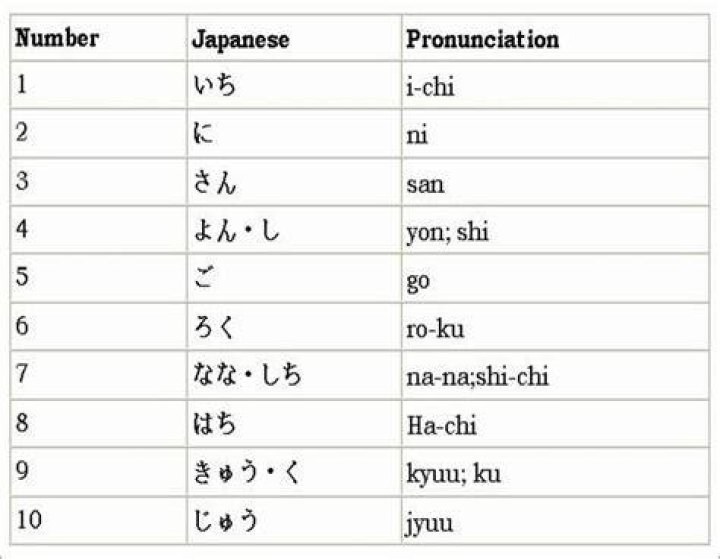
Japanese numbers operate through two primary systems that coexist: the native Japanese counting words and the Sino-Japanese system borrowed from Chinese centuries ago. Both remain actively used in modern Japan, with context determining which system speakers employ. The number 6 is "roku" (ろく) in Sino-Japanese and "mu" or "muttsu" (むっつ) in native Japanese, while 7 is "shichi" or "nana" (しち/なな) in Sino-Japanese and "nanatsu" (ななつ) in native Japanese.
The Two Counting Systems Explained
Japan's linguistic history created this dual structure when Chinese characters and vocabulary entered the language around the 5th century. The Sino-Japanese system dominates mathematical contexts, phone numbers, and addresses. You'll hear "roku" for 6 in most formal situations.
Native Japanese numbers typically count objects up to ten, often paired with counters. "Muttsu" for 6 and "nanatsu" for 7 sound softer, more colloquial. Children learn both systems simultaneously in school, switching between them naturally based on context.
Interestingly, the number 7 has two common Sino-Japanese pronunciations. "Shichi" represents the traditional reading, but "nana" gets used frequently to avoid confusion with "ichi" (one) during phone conversations or when clarity matters. This practical adaptation shows how Japanese speakers prioritize clear communication over rigid adherence to one pronunciation.
Pronunciation Guide for 6 and 7
Pronouncing "roku" requires a rolled 'r' sound, softer than Spanish but distinct from the English 'r'. The 'o' sounds like the vowel in "rode," and the 'u' remains nearly silent, making it sound close to "rok" with a slight vowel tail.
For "shichi," the 'shi' matches the English "she," while 'chi' sounds like "chee." Native speakers often prefer "nana" in casual speech because it flows more smoothly. "Nana" simply repeats the 'na' syllable twice with equal stress on both parts.
"Muttsu" begins with 'mu' like "moo" without the elongated vowel, followed by a doubled 't' sound creating a brief pause before 'tsu.' The 'tsu' ending resembles the 'ts' in "cats" but functions as a full syllable. "Nanatsu" combines the 'nana' pronunciation with the same 'tsu' ending.
Cultural Significance and Superstitions
Numbers carry symbolic weight in Japanese culture. Seven holds particularly auspicious status, appearing in the Shichifukujin (Seven Gods of Fortune) who bring luck and prosperity. Traditional celebrations recognize seven as a fortunate number, with the 7-5-3 Festival (Shichi-Go-San) marking important childhood milestones.
The number six lacks the intense symbolism of seven but appears neutrally in most contexts. Unlike the number four (shi), which sounds like "death" and creates strong superstitions, six generates no particular anxiety or celebration. It simply exists as a functional digit without cultural baggage.
Restaurants sometimes avoid table numbers containing four but rarely skip six or seven. Buildings might lack a fourth floor, yet the sixth and seventh floors appear without concern. This practical difference affects daily life in subtle ways, from apartment numbering to hospital room assignments.
Practical Usage in Daily Conversation
When telling time, Japanese speakers say "roku-ji" (6 o'clock) and "shichi-ji" or "nana-ji" (7 o'clock). Most people prefer "nana-ji" for clarity. Dates use the Sino-Japanese system exclusively: "rokugatsu" means June (sixth month), while "shichi-gatsu" indicates July (seventh month).
Shopping scenarios require understanding both systems. Prices always use Sino-Japanese numbers, so 600 yen is "roppyaku en" (roku becomes "rop" before "hyaku" for hundred). When counting items like apples, you might hear "ringo muttsu" (six apples) using the native system with the appropriate counter.
Phone numbers present another common situation. Japanese speakers typically say each digit individually using Sino-Japanese numbers, though "nana" replaces "shichi" almost universally to prevent mishearing. A phone number containing 6 and 7 would use "roku" and "nana" in sequence.
Writing 6 and 7 in Japanese
Three writing systems exist in Japanese: hiragana, katakana, and kanji. Each serves different purposes, though all can represent numbers.
The kanji for 6 is 六 (roku), a relatively simple character resembling a roof or hat shape. Its strokes flow in a specific order that learners must memorize. The kanji for 7 is 七 (shichi/nana), which looks somewhat like a cross with an additional stroke.
Hiragana versions appear as ろく for 6 and しち or なな for 7. These phonetic characters get used in children's books or when writers want to ensure easy reading. Katakana rarely represents numbers except in specific stylistic choices or foreign contexts.
Modern Japanese increasingly uses Arabic numerals (6, 7) in everyday writing, especially for prices, dates, and mathematical expressions. However, formal documents, traditional contexts, and literary works still employ kanji for numbers regularly.
Common Mistakes Learners Make
Beginning students often confuse when to use native versus Sino-Japanese numbers. The tendency to apply one system universally creates awkward phrases that native speakers immediately recognize as non-native. Context matters enormously, and developing intuition requires exposure and practice.
Pronunciation errors frequently occur with "roku" when learners use an English 'r' sound instead of the softer Japanese version. This single mistake can make the number incomprehensible in conversation. Similarly, saying "shichi" with hard consonants rather than soft ones marks speech as foreign.
Another common error involves forgetting that "nana" and "shichi" both mean seven, then becoming confused when hearing different pronunciations in various contexts. Some learners fixate on one pronunciation, missing the flexibility native speakers employ naturally.
Numbers in Japanese Idioms and Expressions
Japanese idioms frequently incorporate numbers, though seven appears more often than six in traditional sayings. "Nana korobi ya oki" (七転び八起き) literally means "fall seven times, stand up eight," expressing perseverance through adversity. This proverb remains popular in motivational contexts.
The phrase "shichi-go-san" beyond the festival name also represents the traditional belief that odd numbers bring good fortune. Seven's prominence in this thinking elevates its cultural status beyond mere arithmetic value.
Six appears less frequently in idiomatic expressions but shows up in compound words and specialized vocabulary. "Rokudemonai" uses six in a word meaning "worthless" or "hopeless," though the connection to the number has become obscure through linguistic evolution.
Regional Variations and Dialects
Standard Japanese pronunciation provides the foundation, but regional dialects sometimes alter how people say numbers. Kansai dialect speakers might pronounce certain number combinations differently, adding regional flavor to otherwise standardized vocabulary.
Older generations occasionally use archaic pronunciations that younger Japanese speakers recognize but rarely employ. These variations appear in traditional songs, historical dramas, or when elderly speakers converse in their native dialects.
The preference between "shichi" and "nana" for seven also varies by region and context, with some areas showing stronger preferences than others. Tokyo speakers often lean toward "nana" in casual speech, while formal announcements might use "shichi" more consistently.
Learning Tips for Mastery
Repetition builds fluency with Japanese numbers faster than any other method. Counting objects daily, saying phone numbers aloud, and practicing time expressions embeds pronunciation patterns in memory. Five minutes of daily practice produces better results than occasional intensive study sessions.
Watching Japanese media with subtitles helps learners recognize when native speakers choose different number systems. Pay attention to shopping scenes, time announcements, and casual conversations to understand contextual switching naturally.
Flashcards work well for memorizing both kanji and pronunciation simultaneously. Writing practice reinforces visual memory, while speaking practice develops proper accent and rhythm. Combining multiple learning modalities creates stronger neural pathways than relying on one approach alone.
Frequently Asked Questions
Why does Japanese have two ways to say the same numbers?
Japanese developed two counting systems through historical language contact. Native Japanese words existed before Chinese influence arrived around the 5th century, bringing Sino-Japanese numbers. Rather than replacing the original system, both survived and specialized for different contexts. Native numbers typically count objects up to ten, while Sino-Japanese numbers handle mathematics, dates, and larger quantities. This dual system persists because each serves distinct communicative functions that Japanese speakers navigate effortlessly.
Should I use "shichi" or "nana" for the number 7?
Both pronunciations are correct, but "nana" sees wider use in daily conversation because it prevents confusion with "ichi" (one). Phone numbers almost exclusively use "nana" for this reason. Formal contexts, written documents, and certain traditional expressions prefer "shichi." When uncertain, "nana" represents the safer choice for learners. Native speakers switch between them naturally based on context and clarity needs, so developing comfort with both pronunciations serves learners well in the long term.
How do I know when to use native Japanese versus Sino-Japanese numbers?
Context determines which system applies, though some general patterns exist. Use Sino-Japanese numbers (roku, shichi/nana) for mathematics, time, dates, phone numbers, addresses, and prices. Native Japanese numbers (muttsu, nanatsu) appear when counting objects up to ten, especially with counters, or in certain traditional expressions. Children's speech tends toward native numbers initially. The distinction becomes intuitive with exposure, but when uncertain, Sino-Japanese numbers work in most situations. Listening to native speakers in various contexts accelerates learning these patterns naturally.
Final Thoughts
Mastering 6 and 7 in Japanese represents more than memorizing vocabulary. These numbers illustrate the language's layered history, cultural values, and practical communication strategies. The dual counting system initially confuses learners but reveals Japanese's adaptability and nuance once understood.
Regular practice transforms these numbers from conscious effort into automatic response. Whether ordering at restaurants, scheduling appointments, or discussing prices, confidence with basic numbers enables countless daily interactions. The cultural associations, pronunciation variations, and contextual flexibility surrounding even simple digits like 6 and 7 demonstrate why Japanese rewards persistent study with deeper cultural understanding.
